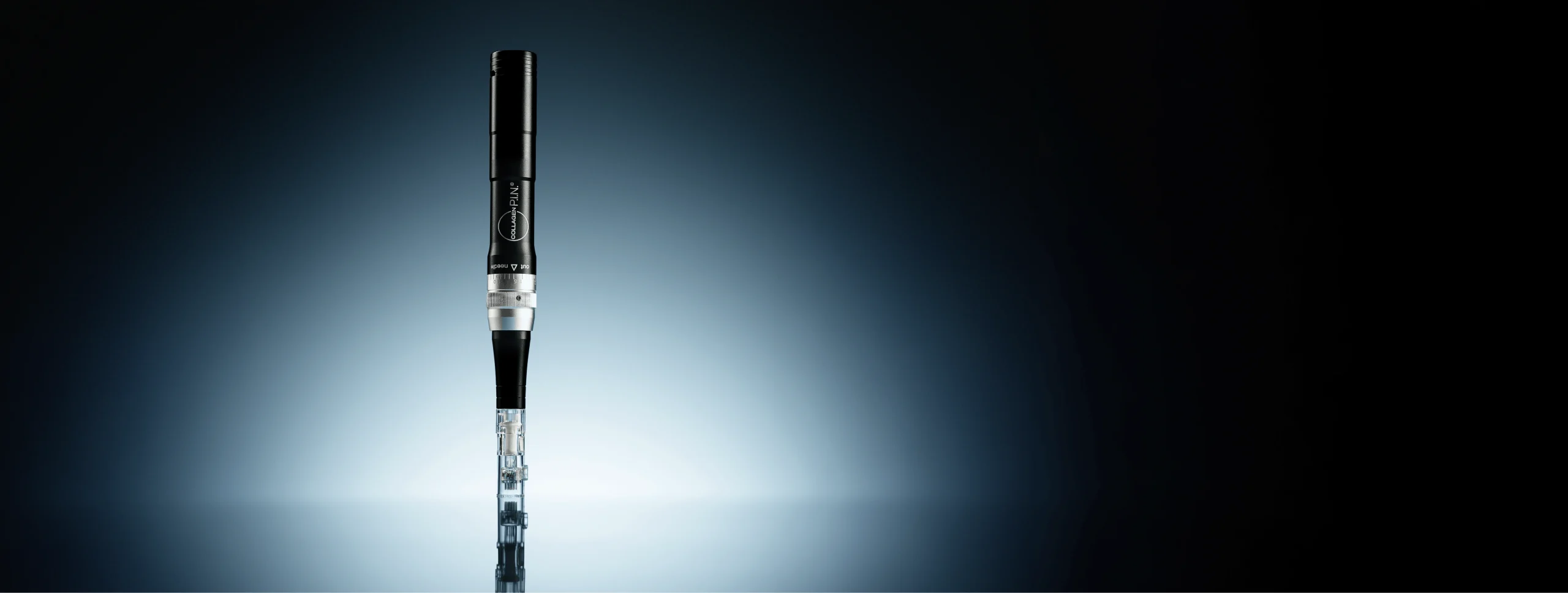
How to Choose a Microneedling Pen: 2026 Pro Guide
The microneedling device market is crowded, and the stakes for your practice are high. Walk into any aesthetics trade show in 2026 and you will find dozens of brands competing for your attention, each claiming superior results through needle count, motor power, or proprietary technology. Most buying guides online target consumers. This one does not. You need a criteria-based framework that connects directly to patient safety, clinical outcomes, regulatory compliance, and practice economics. This guide provides exactly that. By the end, you will know what to ask, what to verify, and how to defend your purchase decision to your patients, your licensing board, and your accountant.
What Is a Microneedling Pen and How Does It Work?
A microneedling pen is an electric handheld device that drives a cartridge of fine needles vertically into the skin at a controlled depth and speed. Unlike dermarollers, which create diagonal channels through rolling motion, a pen delivers needles in a straight up-and-down motion, creating precise micro channels without lateral tearing. You adjust needle depth, speed, and pass technique based on the patient’s skin condition, treatment area, and Fitzpatrick skin type.
The Science of Collagen Induction Therapy
Collagen induction therapy (CIT), also called percutaneous collagen induction (PCI), is the biological mechanism that makes microneedling effective. When needles puncture the skin, they trigger the wound healing cascade: platelets aggregate, growth factors are released, and fibroblasts migrate to the treatment zone.
Over the following days and weeks, those fibroblasts synthesize new collagen and elastin, gradually remodeling the dermal matrix. A study in the Journal of Cutaneous and Aesthetic Surgery confirmed that controlled microneedling produces measurable increases in collagen types I, III, and VII without causing the epidermal destruction associated with ablative resurfacing. Needle depth determines which skin layer is targeted.
Superficial passes at 0.25-0.5 mm engage the stratum corneum and upper epidermis, enhancing transepidermal absorption of topical serums. Deeper passes at 1.0-2.5 mm reach the papillary and reticular dermis, where fibroblast activation drives meaningful collagen synthesis for acne scar remodeling and skin laxity correction.
How Microneedling Pens Differ from Dermarollers and Stamps
Dermarollers create diagonal channels rather than vertical ones. The rolling motion means the needle tip enters at an angle and exits at a different angle, increasing epidermal shearing, uneven depth, and patient discomfort. Stamps operate vertically like pens but require manual pressure and repetitive stamping movements, making consistent coverage over large areas slow and operator-dependent. Electric microneedling pens solve both problems.
Motorized vertical oscillation delivers consistent stroke depth regardless of hand pressure variation, and the gliding technique covers treatment areas efficiently. For professional clinical use, there is no practical justification for choosing a roller or stamp over a well-engineered pen device.
Professional-Grade vs. Consumer-Grade Devices
The distinction between professional and consumer microneedling devices reflects meaningful differences in engineering, regulatory status, and clinical capability.
| Feature | Professional-grade | Consumer-grade |
|---|---|---|
| Needle depth range | 0.1–3.0 mm | Typically 0.1–0.5 mm |
| FDA regulatory status | 510(k) cleared (US market) | Often uncleared, or cleared for superficial use only |
| Motor quality | Medical-grade, variable frequency | Low-cost motor, fixed or limited speed |
| Cartridge sterility | ISO-compliant, single-use, sealed | Variable; often inadequately labelled |
| Needle material | Surgical-grade titanium or stainless steel | Mixed quality; may degrade rapidly |
| Intended user | Licensed professional or physician | General consumer |
| Vendor support | Training, compliance documentation, warranty | Minimal or none |
8 Most Important Criteria for Choosing a Professional Microneedling Pen
These eight criteria should guide your device evaluation. Each one connects to a specific dimension of clinical performance, patient safety, or practice compliance.
1. FDA Clearance – The Non-Negotiable Criterion
The U.S. Food and Drug Administration classifies microneedling pens as Class II medical devices. To be legally marketed in the United States for clinical use, a device must receive 510(k) clearance – a pre-market notification pathway through which a manufacturer demonstrates that their device is substantially equivalent in safety and effectiveness to a legally marketed predicate device. Verify any device’s clearance status directly through the FDA 510(k) database. Here is how:
- Go to the FDA 510(k) database at
accessdata.fda.gov/scripts/cdrh/cfdocs/cfpmn/pmn.cfm - Search by device name, manufacturer name, or product code. For microneedling pens, the relevant product code is typically “OZO” or a closely related classification.
- Review the clearance decision letter and the cleared indication for use. Confirm the device is cleared for the specific treatment application you intend to perform.
Using a non-cleared device in a licensed aesthetics practice is a compliance violation. If a patient experiences an adverse event with a non-cleared device, your liability exposure increases significantly. Your insurer may deny coverage, and your state board may consider the treatment outside your authorized scope of practice. The FDA’s medical device overview explains these requirements clearly for practitioners. Every professional device you consider should come with documentation of its cleared indication for use. If a sales representative cannot produce this documentation on request, walk away.
2. Needle Depth Range and Adjustability
The depth range of a professional microneedling pen determines which skin layers you can reach and which conditions you can effectively treat. A device limited to 0.5 mm serves serum delivery and superficial texture work – useful, but clinically insufficient for scar remodeling or significant laxity treatment. A full-scope professional device requires a minimum depth range of 0.1 mm to 2.5 mm with micro-incremental adjustment, typically in 0.1 mm steps. That precision matters clinically – the difference between 1.5 mm and 1.75 mm can mean the difference between comfortable, effective treatment and unnecessary patient discomfort on sensitive areas like the forehead or undereye zone.
| Treatment area / condition | Recommended depth | Notes |
|---|---|---|
| Fine lines (periorbital, lip) | 0.25–0.5 mm | Thin skin; keep shallow to avoid bruising |
| Overall skin texture & tone | 0.5–1.0 mm | Papillary dermis engagement |
| Acne scars (rolling, boxcar) | 1.5–2.5 mm | Reticular dermis; fibroblast activation zone |
| Deep atrophic scarring | 2.0–3.0 mm | Medical-grade device and supervision required |
| Stretch marks (striae) | 1.5–2.5 mm | Multiple directional passes |
| Scalp / hair loss | 0.5–1.5 mm | Growth factor stimulation at follicular level |
| Neck and décolletage laxity | 1.0–1.5 mm | Thinner skin than face; adjust conservatively |
Depth settings are general guidance for trained practitioners and vary by skin type, device, and patient assessment. They are not instructions for at-home use.
Precise depth control – rather than toggling between preset levels – is a meaningful clinical differentiator. Look for devices with a clearly calibrated depth dial, not a push-button range selector that jumps in 0.5 mm increments.
3. Needle Count (Pin Density) and Cartridge Configuration
Pin count refers to the number of needles in a single cartridge, and it affects treatment coverage, session time, patient comfort, and the density of the collagen response.
- 9-pin cartridges: Narrow-tip, high-precision. Useful for detailed work around the nose, lips, and eye contour where a larger cartridge cannot maneuver effectively.
- 12-pin cartridges: A step up in coverage without sacrificing maneuverability. Often used for localized scar treatment.
- 16-pin cartridges: Mid-density option offering balance between speed and precision.
- 24-pin cartridges: Good general-purpose full-face coverage for skin texture and fine line treatment.
- 36-pin cartridges: The professional standard for full-face collagen induction. With 36 needles distributed across the cartridge face, each pass covers significantly more surface area than lower-density configurations. This means fewer passes to achieve full coverage, reduced session time, and a more uniform collagen stimulus across the treatment zone.
Here is the clinical math: if a 9-pin cartridge requires four overlapping passes to cover the same area a 36-pin covers in one, the patient receives four times the mechanical trauma from pass repetition – while the 36-pin achieves the same stimulation in a single, more comfortable glide. For the practitioner, this translates to faster sessions, reduced hand fatigue, and more consistent treatment across a full face. A professional device should support multiple cartridge configurations, allowing you to switch between a 9-pin for detail work and a 36-pin for full-face passes within the same session.
4. Motor Quality – Speed, Frequency, and Stroke Consistency
Motor quality is the most technically underappreciated criterion in microneedling device selection. RPM vs. frequency: RPM (revolutions per minute) measures how many times the motor completes a full cycle per minute. Frequency – measured in Hz or cycles per second – describes the needle’s oscillation rate at the tissue interface. A high-RPM motor running at low consistency may produce variable stroke depths from one oscillation to the next. A well-engineered high-frequency motor delivers uniform needle penetration on every stroke, regardless of operator hand speed or pressure variation. If needle penetration depth varies stroke-by-stroke – even within a single pass – some areas receive adequate dermal stimulation while others are undertreated. This leads to patchy collagen deposition, uneven outcomes, and potentially increased trauma where the motor compensates with erratic force. Request the motor’s frequency range (in Hz), whether the device uses a servo-controlled motor or a standard DC motor, and whether the speed settings maintain consistent torque under resistance. A reputable manufacturer will have answers to these questions. A vendor who cannot provide them is selling marketing, not engineering. Professional devices typically operate in a frequency range of 6,000 to 18,000 RPM across their speed settings, with the top clinical performers maintaining torque consistency across the full range.
5. Airflow and Anti-Drag Technology
Airflow technology is a feature that significantly impacts patient experience and treatment quality. When a microneedling cartridge glides across skin, especially where the skin is soft or has natural moisture from applied serum, the cartridge can create a mild suction or drag effect. This drag pulls the skin slightly as the device moves, creating micro-tears at the tissue surface rather than clean vertical punctures. The result is increased patient discomfort, surface trauma, and slower healing. Airflow-assisted cartridge systems address this by introducing controlled air circulation around the needle head. The airflow breaks the micro-suction seal that forms between the cartridge face and the skin surface, allowing the device to glide cleanly without drag. Patients experience less discomfort during treatment passes, and the skin surface remains intact outside the intended puncture zones. When evaluating devices, ask specifically whether the cartridge design incorporates anti-drag or airflow-assisted technology, and request evidence – whether from published testing data or clinical validation – that the design reduces surface friction.
6. Cordless Design and Ergonomics
This criterion is consistently overlooked in buying guides, but it is genuinely important for practitioners who perform multiple treatments per day. A corded device is physically tethered to a power source. During treatment, the cord drapes across the patient or your wrist, creating drag and limiting the angle at which you can approach facial contours. The undereye area, the nasal ala, and the lip border all require precise short-stroke movements – and a cord actively works against that precision. If you treat four to eight patients per day, your hand and wrist fatigue are real clinical variables. A cordless device eliminates cord tension from the ergonomic equation, reducing cumulative strain across a full schedule. Weight distribution matters too: a top-heavy device shifts the center of gravity toward the motor end, requiring compensatory grip pressure that compounds fatigue. Evaluate a device’s weight and balance before committing. A full microneedling session on a single patient takes 30 to 60 minutes. Your device’s battery must sustain consistent motor performance for the full duration without voltage drop. Ask vendors for documented battery life under clinical load conditions, not just idle standby ratings.
7. Cartridge Safety – Sterility, Material, and Single-Use Standards
Every professional microneedling cartridge must be single-use, individually packaged, and sterile. This is a clinical hygiene standard aligned with OSHA’s bloodborne pathogen guidelines, which apply whenever skin barrier disruption creates the potential for blood or serum contact. Both stainless steel and titanium-coated needles are used in professional cartridges. Stainless steel needles are sharp at the point of manufacture and perform well across a single session. Titanium-coated needles offer greater hardness and durability, which reduces tip deformation during use – particularly in high pin-count cartridges where each individual needle is smaller in diameter. For single-use applications, the practical difference is modest. For any device marketed for multiple uses of the same cartridge (a red flag in professional settings), titanium’s durability becomes more relevant – but that practice should never occur in a licensed clinical context regardless of needle material. Cartridges must lock securely into the device body and release cleanly without manual needle contact. The device body should be wipeable with hospital-grade disinfectant, and the cartridge locking mechanism should prevent accidental needle exposure during cartridge changes. Confirm these features during any device demonstration.
8. Vendor Support, Training, and Regulatory Documentation
The device itself is only part of the purchase. The vendor relationship determines whether you can operate the device compliantly, handle technical issues efficiently, and grow your clinical capability over time. Before purchasing, ask every prospective vendor these specific questions:
- Can you provide the FDA 510(k) clearance letter and cleared indication for use documentation?
- Is clinical training available – in-person, live, and led by a qualified trainer?
- What is the warranty period and what does it cover?
- Are replacement cartridges stocked domestically, and what is the typical lead time?
- Is there a US-based customer support line with clinically knowledgeable staff?
- Do you offer in-person product demonstrations before purchase?
- What is your protocol for device recall or safety notice communication?
A vendor who provides clear, prompt answers to all seven questions is worth trusting. A vendor who deflects, delays, or cannot provide regulatory documentation is a vendor whose product you should not put on your patients’ faces.
Fitzpatrick Skin Type Compatibility – Matching Device Settings to Patient Profiles
The Fitzpatrick skin type scale is a six-category classification system developed by dermatologist Thomas Fitzpatrick in 1975. It categorizes skin by its response to ultraviolet radiation, ranging from Type I (very fair, always burns, never tans) to Type VI (deeply pigmented, never burns). In microneedling, Fitzpatrick type informs depth selection, treatment frequency, and post-treatment risk of post-inflammatory hyperpigmentation (PIH).
Overview of Fitzpatrick Skin Types I-VI
- Type I: Very fair, freckled, blue or green eyes, always burns, never tans
- Type II: Fair, light hair, blue or brown eyes, usually burns, sometimes tans
- Type III: Medium, any eye color, sometimes burns, always tans
- Type IV: Olive/light brown, rarely burns, always tans
- Type V: Brown skin, very rarely burns, always tans
- Type VI: Deeply pigmented dark brown or black skin, never burns
Device Settings Recommendations by Skin Type
| Fitzpatrick type | Recommended depth | Speed setting | Session frequency | PIH risk | Key precaution |
|---|---|---|---|---|---|
| I–II | 0.5–2.5 mm | Medium–high | Every 4 weeks | Low | Monitor for erythema duration |
| III | 0.5–2.0 mm | Medium | Every 4–6 weeks | Low–moderate | Pre-treat with vitamin C; monitor response |
| IV | 0.25–1.5 mm | Low–medium | Every 6 weeks | Moderate | Avoid aggressive passes; prioritise gentle protocol |
| V | 0.25–1.0 mm | Low | Every 6–8 weeks | Moderate–high | Conservative depth; tyrosinase-inhibiting pre-care |
| VI | 0.1–0.75 mm | Low | Every 8 weeks | High | Medical supervision recommended; extensive pre-care |
PIH: post-inflammatory hyperpigmentation. Settings are general guidance for trained practitioners and are adjusted case by case following patient assessment. Not instructions for at-home use.
An FDA-cleared device’s cleared indication for use specifies the Fitzpatrick skin types for which the device was clinically tested and validated. Treating a Fitzpatrick Type V or VI patient with a device tested only on Types I-III places you outside the cleared scope and outside clinical evidence boundaries. Always confirm the Fitzpatrick range covered in a device’s clearance documentation before treating patients with darker skin tones.
Professional Microneedling Pen Comparison: What to Look For in a Side-by-Side Evaluation
When comparing specific devices, use a standardized criteria matrix. The table below showcases what to look for in some of the best microneedling pens for professionals
| Criterion | Collagen P.I.N. | SkinPen | Dermapen 4 | Dr. Pen Ultima M8 | Exceed |
|---|---|---|---|---|---|
| FDA 510(k) cleared | Yes | Yes | No (TGA cleared) | No | Yes |
| Depth range | 0.1–3.0 mm | 0.1–2.5 mm | 0.1–2.5 mm | 0.0–2.5 mm | 0.1–2.5 mm |
| Max pin count | 36-pin | 12-pin | 16-pin | 36-pin | 24-pin |
| Motor type | High-frequency, servo-consistent | Medical-grade | Proprietary | Consumer-grade | Medical-grade |
| Cordless | Yes | No | Yes | No | No |
| Airflow technology | Yes | No | No | No | No |
| Needle material | Surgical-grade | Stainless steel | Stainless steel | Mixed | Stainless steel |
| US-based support | Yes | Yes | Limited | Limited | Yes |
| Professional-only sales | Yes | Yes | No | No | Yes |
FDA clearance status is the first filter. Any device without US 510(k) clearance carries compliance risk in American clinical practice regardless of its other merits. Among cleared devices, Collagen P.I.N. leads on pin density (36-pin), depth range (0.1-3.0 mm), cordless design, and airflow technology – each translates into a clinical or ergonomic advantage documented in earlier sections. SkinPen by Bellus Medical is a well-established FDA-cleared competitor with a strong clinical training ecosystem. Its 12-pin cartridge and corded design represent meaningful trade-offs relative to Collagen P.I.N.’s configuration for practices prioritizing coverage speed and maneuverability. Dermapen 4 is widely used globally and offers a strong brand reputation, but its absence of US FDA 510(k) clearance is a compliance consideration US practitioners should not overlook. Dr. Pen devices are popular in the consumer and semi-professional market but are not designed to the engineering or regulatory standards of a dedicated clinical device. Exceed by Candela is a legitimate FDA-cleared professional device with solid support infrastructure, though it lacks the pin density and airflow features of Collagen P.I.N.
Total Cost of Ownership – Evaluating the Real Investment for Your Practice
The purchase price of a microneedling pen is the smallest number in the total cost of ownership (TCO) equation. Practice owners who optimize on device cost alone consistently underestimate the ongoing economics of their treatment menu.
Device Acquisition Cost
Professional microneedling pens range from approximately $300 to $2,500 for the device itself, depending on motor quality, regulatory status, and brand. FDA-cleared clinical devices from established manufacturers typically fall in the $1,200 to $2,500 range. Consumer-positioned devices may appear attractive at $300 to $600, but their cartridge compatibility, regulatory status, and motor longevity often make them more expensive per session over 12 months.
Cartridge Cost Per Session
Cartridge cost is the largest ongoing variable in your TCO model. Professional single-use cartridges typically cost $8 to $25 per cartridge. A full-face treatment using one cartridge per session yields a straightforward cost-per-session figure. Practices that switch cartridges mid-session for detail work (e.g., 36-pin for full face, 9-pin for perioral detail) should budget two cartridges per session.
Estimating Revenue Per Session and ROI Timeline
At four sessions per week, a practice breaks even on a $2,000 device investment in under two months. The compounding factor is patient series completion: most patients book a series of three to six sessions spaced four weeks apart. A single patient series at $250 per session over six sessions generates $1,500 in revenue against approximately $120 in cartridge cost – a 92% gross margin on consumables.
Hidden Costs: Training, Compliance, and Downtime
Factor in the cost of initial training (typically $200-$500 for formal certification programs), state CEU requirements for aestheticians using needle devices, and any device-specific vendor training fees. Account for device downtime: a device without a US-based service center may sit unused for weeks awaiting repair – a direct revenue loss. Budget for a spare device or confirm your vendor’s loaner policy before committing.
Treatment Protocol Considerations When Selecting a Device
The device you choose shapes the protocols you can offer. A device with limited depth range restricts you to superficial treatments. A device without variable speed cannot be optimized for sensitive skin types. Device capabilities and treatment protocols are not separate decisions – they are the same decision.
Session Spacing and Series Length
The standard professional microneedling protocol calls for three to six sessions spaced four weeks apart. This spacing allows the wound healing cascade to complete and new collagen to mature before the next treatment stimulus. The American Academy of Dermatology recognizes microneedling as an established procedure for acne scarring with outcomes supported by published literature.
Some protocols for severe acne scarring extend to six sessions or more, with reassessment at session three. Your device selection must support this series structure – which means you need consistent cartridge availability, reliable motor performance session after session, and a device body that holds up to regular clinical use without degradation.
How Device Capabilities Affect Post-Care Requirements
Deeper treatment passes (1.5 mm and above) produce more visible erythema and require more intensive post-care protocols: mineral-based sunscreen, avoidance of actives for 24-48 hours, and hyaluronic acid serum application to support the skin barrier while microchannels are open.
Transepidermal absorption is dramatically enhanced in the 0-60 minutes following microneedling, making the product you apply immediately post-treatment a meaningful clinical variable. A device with reliable depth control makes your post-care protocols more predictable.
If your device’s actual penetration varies from session to session due to motor inconsistency, your post-care recommendations become guesswork rather than clinical guidance.
Linking Depth and Speed Settings to Specific Skin Concerns
- Acne scars (rolling, boxcar): 1.5-2.5 mm, medium-high speed, 36-pin cartridge for broad coverage. Multiple directional passes in scar zones. Post-care: growth factor serum + mineral SPF.
- Fine lines and superficial texture: 0.5-1.0 mm, medium speed, 24-pin or 36-pin cartridge. Single directional pass. Post-care: hyaluronic acid + barrier repair serum.
- Skin laxity (neck, décolletage): 1.0-1.5 mm, medium speed, 36-pin for efficiency. Post-care: peptide serum + SPF.
- Transdermal serum delivery: 0.25-0.5 mm, low-medium speed, 36-pin for even distribution. Most appropriate for patients new to microneedling or with sensitivity.
Clinical Evidence Supporting Microneedling for Acne Scars and Skin Rejuvenation
Key Published Studies on Microneedling Efficacy
The clinical evidence base for microneedling has grown substantially over the past decade. A widely cited study published in the Journal of Cutaneous and Aesthetic Surgery examined percutaneous collagen induction in patients with atrophic acne scars and found a mean reduction in scar severity score of greater than 50% over a four-session series. Histological analysis confirmed new collagen and elastin formation in the treated dermis at 40 days post-treatment.
A separate trial indexed on PubMed comparing microneedling with fractional CO2 laser for atrophic acne scars found that microneedling produced comparable patient satisfaction scores with significantly shorter downtime and fewer adverse events – a meaningful clinical and economic differentiator for practices that treat working professionals who cannot tolerate extended recovery periods.
What the Research Says About Needle Depth and Collagen Stimulation
The clinical literature consistently supports deeper dermal penetration for scar remodeling applications. Depths of 1.5 mm to 2.5 mm are associated with fibroblast activation in the reticular dermis – the anatomical zone where meaningful scar remodeling occurs.
Superficial passes at 0.5 mm or less produce enhanced transepidermal absorption but do not generate the same collagen synthesis response required for atrophic scar correction.
This evidence directly informs device selection: a professional device must offer validated depth capability at 1.5 mm and above to treat acne scars within the scope of the clinical evidence. A device capped at 0.5 mm is adequate for glow treatments and serum delivery but should not be positioned as a scar-revision tool.
Expected Outcomes: Timeline and Realistic Patient Expectations
Set patient expectations precisely. Most patients begin seeing measurable texture improvement after session two or three. Peak collagen remodeling occurs at 3 to 6 months post-final session, as the collagen maturation cycle requires time to complete.
Acne scar improvement is progressive and cumulative, not immediate. Photographs at baseline and at 90-day intervals provide objective documentation of progress and support patient retention through a full treatment series.
Contraindications that should be identified at intake and factored into protocol design include: active inflammatory acne, rosacea flare, open wounds, recent isotretinoin use (typically defer treatment for 6 months after cessation), keloid or hypertrophic scar tendency, active viral infection (including cold sores in the treatment zone), and blood coagulation disorders.
These contraindications apply regardless of device brand or model – they are patient-specific clinical flags, not device limitations.
Why Collagen P.I.N. Meets Every Professional Selection Criterion
Collagen P.I.N. was designed from the ground up as a professional-only microneedling device, and every specification reflects the criteria this guide identifies as non-negotiable for clinical use.
36-pin cartridge: Collagen P.I.N.’s 36-pin configuration delivers the coverage efficiency, collagen stimulus density, and treatment speed advantages described in this guide’s pin-count section. The cartridge architecture supports clean, consistent needle delivery across each pass without the clustering or uneven spacing that affects lower-quality multi-pin cartridges.
FDA clearance: Collagen P.I.N. holds FDA 510(k) clearance for use as a professional microneedling device. Practitioners can verify this status directly through the FDA 510(k) database and request full clearance documentation from the Collagen P.I.N. team as part of any purchase inquiry.
Enhanced motor and high-frequency performance: The device motor is engineered for consistent stroke frequency across all speed settings, maintaining uniform needle penetration depth regardless of operator hand speed or skin firmness variation. This consistency is the foundation of predictable clinical outcomes.
Advanced airflow technology: Collagen P.I.N.’s cartridge system incorporates airflow-assisted design that prevents suction drag at the skin surface. Patients report noticeably smoother treatment experiences, and practitioners achieve cleaner, more controlled passes – particularly on the cheeks and forehead where surface friction is most pronounced.
Cordless design with full-session battery life: The device operates completely cordlessly, with battery performance designed to sustain full motor frequency and torque through an extended clinical session. No cord management, no mid-session recharging, no compromised maneuverability around facial anatomy.
Adjustable depth precision: The depth dial adjusts from 0.1 mm to 3.0 mm in 0.1 mm increments, covering the full clinical range from superficial serum delivery to deep scar remodeling – with the precision required to customize each treatment zone within a single session.
US-based professional support: Collagen P.I.N. is sold exclusively through licensed professional channels. The brand offers in-person product demonstrations, provider portal access, clinical training resources, US-based customer support, and direct representative access – every vendor criterion identified in this guide’s evaluation framework.


 Enter your information to receive a 2022 Catalog