Microneedling Depth Chart & Guide (2026)
What most people prioritise when they go through a Microneedling procedure, is safety and long term effects of the treatment. This makes choosing the correct microneedling depth all the more important with different areas of the skin needing different levels of depth to achieve desired results.
Histological studies show microneedling can increase collagen and elastin deposition by up to 400% within 6 months after treatment according to a study by the NCBI. Hence we made it our goal to provide an indepth look into Microneedling depth with a small guide so that you can opt for the right treatments to give you the results that you desire.
Professional devices like Collagen P.I.N. allow practitioners to precisely control penetration depth, making it possible to tailor treatments to each facial zone and treatment objective. Here’s a Depth Chart that all of our partners use to provide their clients ultimate satisfaction that only the best microneedling pens provide
Microneedling Depth Chart
Which Microneedling Pen Fits Your Clinic?
Compare what matters most before you invest. Get a quick recommendation based on your treatment goals, clinic setup, and buying priorities.
- Find the right fit for acne scars, skin rejuvenation, or advanced treatment menus
- Compare traditional vs RF microneedling based on your clinic needs
- See what makes sense for solo providers, medspas, and multi-provider practices
- Factor in cartridge workflow, training, maintenance, and long-term cost
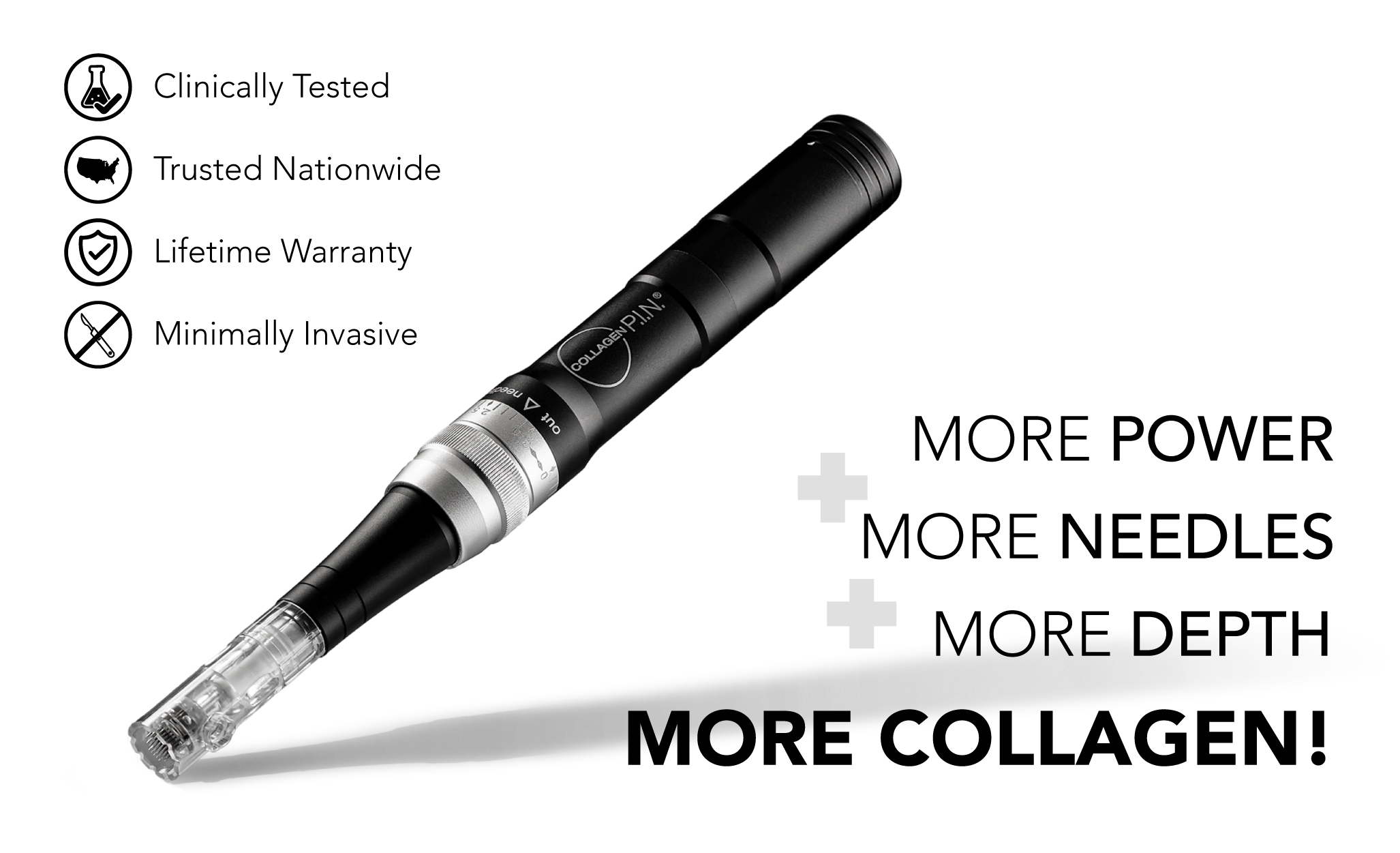
Forehead: 0.25mm – 0.5mm
The forehead typically requires shallow depths due to thinner skin and proximity to bone. Treatments in this region often focus on improving fine lines, texture refinement, and enhancing topical product absorption.
Around the Eyes: 0.2mm – 0.3mm
The periorbital area contains the thinnest skin on the face. Very shallow depths are used here to support collagen stimulation while minimizing irritation and downtime.
Nose: 0.5mm – 0.75mm
The nose has thicker sebaceous skin compared to surrounding areas. Slightly deeper penetration helps improve pore appearance and skin texture.
Cheeks: 0.75mm – 1.5mm
Cheeks tolerate deeper microneedling depths and are commonly treated for acne scars, collagen induction, and overall skin rejuvenation. This area often benefits most from adjustable-depth professional devices.
Upper Lip: 0.2mm – 0.5mm
Because of increased sensitivity and thinner tissue structure, conservative depth settings are recommended to treat fine lines safely.
Chin: 0.75mm – 1.0mm
The chin typically supports moderate depths that help improve skin firmness and texture irregularities.
Jawline: 1.0mm – 2.0mm
The jawline contains thicker dermal structure and is often treated at deeper settings when targeting skin laxity or contour refinement under professional supervision.
Conclusion
We hope that with this depth chart and small guide, you as a practice owner can help make your patients feel their absolute best with skin treatments that leaves them happy and satisfied.


 Enter your information to receive a 2022 Catalog