Rejuvapen vs Skinpen
The Core Difference: What Actually Sets These Devices Apart
When practices begin comparing microneedling devices, two names dominate the conversation: Rejuvapen and SkinPen. Both deliver the same basic mechanism – controlled micro-injuries that trigger collagen remodeling – yet the details that matter most often get buried in marketing copy. FDA clearance scope, cartridge safety design, needle depth precision, and total cost rarely receive the scrutiny they deserve.
Start here: SkinPen, made by Crown Aesthetics, is the only microneedling device with FDA clearance specifically for treating acne scars in patients aged 22 and older, across all Fitzpatrick skin types.
Rejuvapen, including the newer Rejuvapen NXT, carries FDA 510(k) clearance as a general microneedling device but markets itself primarily on cost efficiency and cordless convenience for broad skin rejuvenation.
A third option – Collagen P.I.N. – offers a wider adjustable depth range and competitive cartridge economics with sealed single-use design. The real distinctions emerge in cartridge engineering, needle depth range, and long-term cost structure for practices. Understanding these differences shapes both clinical outcomes and your bottom line.
Still Choosing Between Rejuvapen and SkinPen?
Compare your options and discover how Collagen P.I.N.® could provide the performance, flexibility, and professional support your practice needs.
- Compare needle depth, cartridge design, and treatment versatility
- Review regulatory status and professional-use considerations
- Evaluate consumable costs, maintenance, training, and support
- Find the microneedling system that best fits your treatment goals
Rejuvapen and Rejuvapen NXT
Rejuvapen built its market position as an affordable, cordless option. It appeals to smaller practices and independent estheticians who need portability and want to minimize upfront investment.
Technical Specifications
The Rejuvapen NXT is the current generation, replacing earlier corded and semi-cordless models. Distributors emphasize its FDA 510(k) clearance, U.S. manufacturing, and competitive cost-per-procedure compared to other cleared devices. The device offers adjustable needle depth typically cited in the 0.25mm to 2.5mm range depending on cartridge selection. It features a rechargeable cordless body with dial-based depth adjustment and disposable needle cartridges that snap onto the pen.
FDA Clearance: What It Does and Doesn’t Cover
Rejuvapen NXT is marketed as FDA 510(k) cleared for microneedling. Practices and patients should independently verify current clearance status through the FDA’s 510(k) Premarket Notification database. Clearance scope, indications, and device modifications evolve, and marketing claims don’t always reflect the exact language of the clearance letter.
SkinPen: FDA-Cleared for Acne Scars Specifically
SkinPen, manufactured by Crown Aesthetics, occupies a distinct position. It was the first microneedling device to receive FDA clearance in the United States and remains the only one specifically cleared for acne scar treatment in patients 22 and older across all Fitzpatrick skin types I through VI.
Technical Specifications
SkinPen Precision, the current model, uses a corded design with single-use, sealed cartridges. Needle depth is adjustable, generally cited in the 0.25mm to 2.5mm range. The device architecture centers on a sealed cartridge system designed to prevent fluid and tissue backflow into the handpiece.
Sealed Cartridge Design and Cross-Contamination Prevention
This is SkinPen’s primary technical distinction. The cartridge uses a barrier film and enclosed needle path that stops blood and serum from being drawn back into the device housing during use – a phenomenon called backflow or suction. Backflow into a reusable pen body creates cross-contamination risk between patients if any component isn’t properly disposed of or sanitized.
FDA Clearance Specificity
SkinPen’s FDA clearance is specific and well-documented: it covers facial acne scars in patients aged 22 and older across all Fitzpatrick types. This is the single clearest differentiator from competing devices. Most microneedling pens – including many imported “Dr. Pen” style tools – carry no FDA clearance, and even cleared devices often have broader, less specific indications than SkinPen’s acne-scar-specific authorization.
Side-by-Side Comparison: Rejuvapen NXT vs. SkinPen Precision
| Feature | Rejuvapen NXT | SkinPen Precision |
|---|---|---|
| FDA Clearance | 510(k) cleared as a microneedling device | 510(k) cleared specifically for acne scars, ages 22+, Fitzpatrick I-VI |
| Needle Depth Range | 0.25mm – 2.5mm | 0.25mm – 2.5mm |
| Cartridge Design | Disposable snap-on | Sealed, single-use with barrier film |
| Backflow Prevention | Manufacturer-dependent, less documented | Engineered barrier film for backflow prevention |
| Power Design | Cordless, rechargeable | Corded, consistent motor speed |
| Typical Patient Cost Per Session | $150 – $350 | $200 – $450 |
| Cartridge Cost (per unit) | Lower | Higher, reflects sealed engineering |
| Ideal For | Cost-conscious general rejuvenation | Acne scarring, clinical-grade documentation |
Pricing varies by region, provider credentials, and bundled treatment packages. Confirm current rates directly with licensed providers.
Understanding Cartridge Safety: Why Backflow Matters
The Suction Risk Explained
“Suction” in microneedling refers to a vacuum effect that can pull blood, lymph fluid, or tissue debris back into the needle cartridge and potentially into the reusable pen body. If a cartridge lacks proper sealing, that backflow can theoretically carry biological material from one use to the next. This isn’t just marketing language. Sealed single-use cartridge design has become a serious clinical consideration among aestheticians and dermatologists because infection-control documentation and patient safety depend on it.
Cartridge Engineering Approaches
SkinPen’s design relies on a barrier film that physically blocks fluid from traveling past the needle tips into the handpiece. Some other devices use bio-sleeve or exhaust port designs intended to vent pressure and reduce suction risk, though the engineering approach differs from SkinPen’s sealed film method. Neither approach has extensive independent, peer-reviewed comparative testing in the public domain. Buyers should request validation data directly from manufacturers rather than relying on marketing claims alone. For a real-world provider perspective on how these devices perform clinically, this comparison of Rejuvapen and SkinPen from an aesthetics professional offers practical insight beyond specifications.
Recovery Timeline and Expected Results
Days 1 Through 10
Most patients follow a predictable recovery pattern regardless of which FDA-cleared device was used, because the biological response depends more on needle depth and technique than brand:
- Days 1-2: Redness and mild swelling similar to sunburn; sometimes pinpoint bleeding immediately after
- Days 2-4: Redness fades; skin may feel tight or slightly rough
- Days 4-7: Mild flaking or dryness as the skin barrier recovers
- Days 7-10: Skin returns to normal appearance with subtle early glow some patients notice
- Weeks 3-6: Collagen remodeling continues beneath the surface; texture and scar improvements typically become visible
Treatment Series
For acne scars and texture, most providers recommend a series of three to six sessions spaced four to six weeks apart, regardless of device. Results depend heavily on scar depth, skin type, and aftercare consistency. No ethical provider guarantees specific outcomes.
Cost Reality for Practices
Per-Session Patient Pricing
Patients typically pay $150 to $450 per session depending on geographic market, provider credentials, and add-ons like PRP or hyaluronic acid serums. Rejuvapen treatments tend toward the lower end; SkinPen sessions often price higher, partly reflecting its specific FDA clearance and market positioning.
Equipment Economics That Matter
This section is where practice-focused comparisons usually stop short, yet equipment cost drives purchasing decisions. Here’s what actually factors into device ownership:
| Cost Factor | Rejuvapen NXT | SkinPen Precision |
|---|---|---|
| Device purchase price | Lower upfront | Higher upfront |
| Per-cartridge cost | Generally lower | Generally higher |
| Training and certification | Often included by distributor | Structured Crown Aesthetics program |
| Power infrastructure | Battery replacement over time | Corded, no battery maintenance |
| Marketing value of FDA claim | General microneedling clearance | Acne-scar-specific clearance; strong for patient marketing |
A practice treating high-volume acne scar patients may value SkinPen’s specific clearance language for informed consent documentation and honest marketing. A practice focused on general rejuvenation and fine lines may prioritize Rejuvapen’s lower cartridge cost for margin protection in the early years of client building.
How to Choose the Right Device: A Practical Framework
Questions for Patients
- Are you specifically treating acne scars? Ask your provider directly whether they use a device with FDA clearance for that indication.
- What’s your realistic budget per session, and how many sessions will you complete?
- Does your provider disclose which device they use and can they explain their cartridge safety design?
- Do you have sensitive skin or keloid history? Discuss needle depth settings before booking.
Questions for Practices Evaluating Purchase
- What’s your average monthly patient volume for microneedling, and does that volume justify higher upfront equipment cost?
- What’s the per-cartridge cost, and how does it affect your margin per session at local market rates?
- Can the manufacturer provide documented FDA clearance letters for client education and informed consent?
- What training and ongoing technical support does the manufacturer offer?
- Does the cartridge design meet your infection-control standards and state board requirements?
Collagen P.I.N.: A Competitive Third Option
When practices weigh Rejuvapen against SkinPen, introducing a third FDA-cleared option into the comparison often shifts the decision. Collagen P.I.N., made by Collagen P.I.N., warrants serious consideration – and I should note that I’m affiliated with this company, so I’m disclosing that interest directly.
Technical Advantages
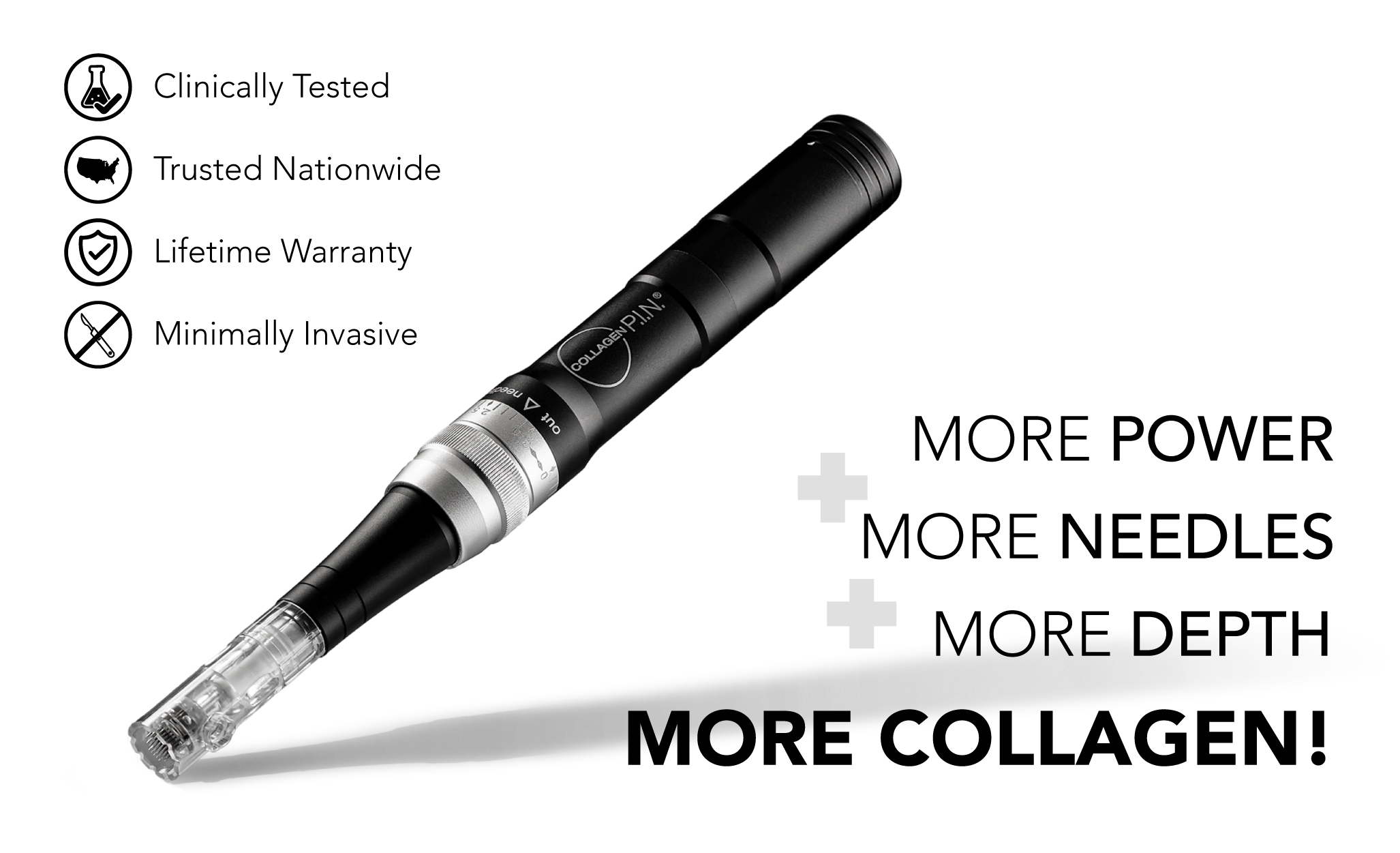
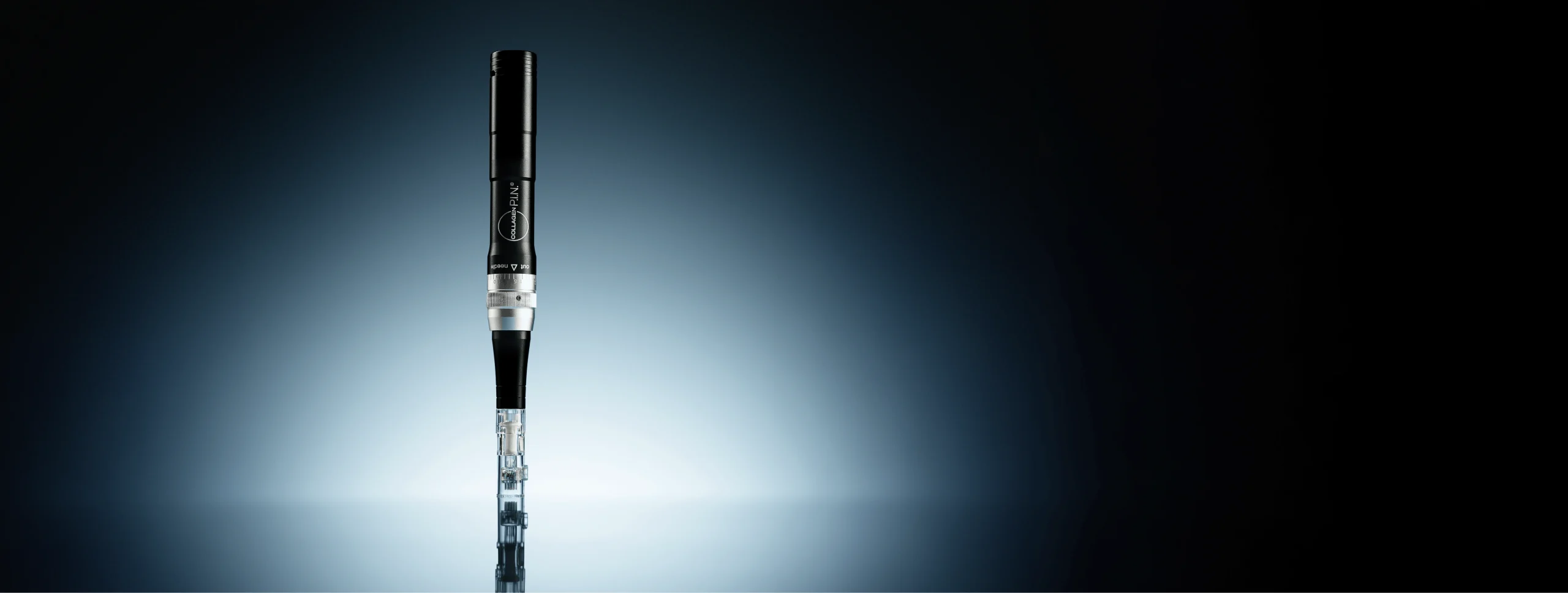
Collagen P.I.N. uses a 36-pin cartridge configuration with an adjustable depth dial ranging from 0.1mm to 3.0mm – a wider range than the typical 0.25mm-2.5mm spread on both Rejuvapen and SkinPen. That extra shallow depth supports gentler treatments for sensitive skin and superficial concerns. The extended deep range provides flexibility for deeper scarring work, all in one device. Like Rejuvapen, Collagen P.I.N. operates cordless for easier handling and flexible multi-room scheduling. It pairs that with a high-frequency vibration motor engineered for smooth, consistent needle penetration – reducing micro-tearing that can occur with less consistent motor speeds.
How Three Devices Stack Up
| Feature | Rejuvapen NXT | SkinPen Precision | Collagen P.I.N. |
|---|---|---|---|
| Needle Depth Range | 0.25mm – 2.5mm | 0.25mm – 2.5mm | 0.1mm – 3.0mm |
| Cartridge Pin Count | Varies by model | Varies by model | 36-pin |
| Power Design | Cordless | Corded | Cordless |
| Cartridge Type | Disposable snap-on | Sealed single-use | Sealed single-use |
| FDA Status | 510(k) cleared | 510(k) cleared, acne-scar specific | 510(k) cleared |
| Value for Practices | Low upfront cost | Higher cost, strong marketing claim | Competitive cost with extended depth range |
Why Practices Switch to Collagen P.I.N.
Practice owners consistently identify three factors driving the switch: the wider depth dial means one device covers both delicate perioral work and deep acne scarring without equipment swaps, cordless design accelerates multi-treatment-room scheduling, and cartridge economics often compare favorably against SkinPen’s per-unit cost while maintaining sealed, single-use safety design. For additional comparisons beyond these three devices, you can explore more alternatives for professional microneedling to see how other options perform.
How Microneedling Works
Microneedling uses fine needles to create controlled micro-injuries in the skin’s upper layers. The goal isn’t to damage tissue but to provoke a healing response. Skin responds by ramping up collagen and elastin production – the two proteins that govern firmness, elasticity, and smooth surface texture.
The Biology Behind Results
The clinical term for this process is collagen induction therapy (CIT). When a microneedling device punctures the epidermis and upper dermis, it triggers a wound-healing cascade: platelets release growth factors, fibroblasts activate, and new collagen fibers form over the following weeks. According to the American Academy of Dermatology, this remodeling process is why microneedling can improve acne scars, fine lines, and uneven texture without the extended downtime of laser resurfacing.
Device Choice Directly Affects Patient Experience
Not all microneedling pens deliver consistent results, and this is the part most comparisons skip entirely. Needle depth accuracy, motor vibration consistency, and cartridge design influence three outcomes patients care about: treatment comfort, result uniformity, and safety from cross-contamination. A pen with inconsistent depth control can under-treat some facial areas and over-traumatize others. A cartridge that allows fluid backflow into the device body creates genuine infection-control risks in multi-patient clinical settings. This is precisely why the FDA regulates these devices as Class II medical instruments rather than treating them as cosmetic tools.
Frequently Asked Questions
What is better than SkinPen?
No single device is universally superior – it depends on your priority. If you need the widest adjustable depth range and cordless convenience at competitive cartridge cost, Collagen P.I.N. deserves evaluation. If your practice needs acne-scar-specific FDA clearance for marketing and consent, SkinPen remains the benchmark.
Does Rejuvapen really work?
Yes. When used correctly by a trained provider, Rejuvapen stimulates the same collagen induction response as any properly functioning microneedling device. Effectiveness depends more on depth accuracy, session frequency, and aftercare than on brand.
What is the most effective microneedling pen available today?
No independent, peer-reviewed head-to-head clinical trial ranks Rejuvapen, SkinPen, and Collagen P.I.N. against each other. Effectiveness for a given patient depends on correct depth selection, provider technique, and treatment consistency rather than any device holding a universal efficacy advantage.
How much does the Rejuvapen device cost?
Patient sessions typically range from $150 to $350. Practice purchase pricing depends on distributor and bundled training or cartridge packages. Contact an authorized Rejuvapen distributor for current rates.
Is Rejuvapen FDA-cleared?
Rejuvapen NXT is marketed as FDA 510(k) cleared for microneedling. Verify current clearance status directly through the FDA’s 510(k) database before purchase or treatment.
Can SkinPen and Rejuvapen treat acne scars?
SkinPen holds FDA clearance specifically for acne scar treatment in patients 22 and older across all Fitzpatrick types. Rejuvapen is used clinically for acne scars as part of general microneedling treatment, but its FDA clearance language is broader and not acne-scar-specific in the same documented way.
How painful is microneedling with each device? Providers typically apply topical numbing cream 20 to 30 minutes before treatment, reducing sensation to mild pressure and vibration. Pain levels depend more on needle depth setting and treatment area than on which device is used.
How long do results last?
Collagen remodeling continues for several months after a treatment series. Many patients maintain results for six to twelve months before considering touch-up sessions, though this varies with age, skin condition, and sun protection.
Which device do professionals prefer and why?
Preference splits along practical lines: cost-focused practices and mobile estheticians often choose Rejuvapen for cordless affordability. Dermatology and med spa practices treating documented acne scarring favor SkinPen for its specific clearance. Practices seeking broader depth flexibility with sealed cartridge safety increasingly evaluate Collagen P.I.N. as a middle path.
What is the difference between Rejuvapen and Rejuvapen NXT?
The NXT designation refers to the current Rejuvapen generation, which distributors describe as offering improved cordless battery performance and refined cartridge compatibility compared to earlier corded and semi-cordless models. To see these devices in clinical action, this demonstration of Rejuvapen NXT in a treatment setting provides practical context beyond specifications.
Making Your Final Decision
Neither Rejuvapen nor SkinPen is universally wrong for every situation. SkinPen earns its premium price through specific, well-documented FDA clearance for acne scars and a sealed cartridge system built around backflow prevention. Rejuvapen earns its market share through cordless convenience and lower cost of entry – especially attractive for newer practices or estheticians watching margins closely. If you’re a practice owner comparing equipment purchases or a patient choosing a provider, ask three key questions before committing:
- Can the provider show you FDA clearance documentation?
- What does the cartridge design do to prevent backflow?
- What will a complete treatment course cost from first session to final touch-up?
These three questions reveal more than any brand name on the box. In 2026, Collagen P.I.N. offers a wider adjustable depth range, cordless handling, and sealed single-use cartridges at a cost structure designed to compete directly with both Rejuvapen and SkinPen. The most complete choice often isn’t the most heavily marketed one – it’s the one that matches your clinical priorities, patient population, and long-term economics.


 Enter your information to receive a 2022 Catalog