10 Best Microneedling Pens for Professional Use [UPDATED](2026)
Microneedling has transformed from a niche treatment to an essential service in modern aesthetics. The market is experiencing remarkable growth, projected to reach over $800 million by 2025/26 and potentially soar to $35.3 billion by 2033.
North America leads this surge, holding 41% of the global market share, as professionals across the USA increasingly adopt advanced technologies to meet client demand. In fact, 73% of dermatologists and plastic surgeons now prefer radiofrequency (RF) microneedling for skin tightening and rejuvenation.
Which Microneedling Pen Fits Your Clinic?
Compare what matters most before you invest. Get a quick recommendation based on your treatment goals, clinic setup, and buying priorities.
- Find the right fit for acne scars, skin rejuvenation, or advanced treatment menus
- Compare traditional vs RF microneedling based on your clinic needs
- See what makes sense for solo providers, medspas, and multi-provider practices
- Factor in cartridge workflow, training, maintenance, and long-term cost
What Makes a Microneedling Pen Professional-Grade?
A professional-grade microneedling pen combines 4 verified traits: regulatory clearance or registration, sterile single-use needle cartridges, adjustable depth and speed controls, and a motor that holds a steady insertion rate under load. Home-use pens and derma rollers lack at least one of these traits, which is why state boards and liability insurers treat them differently.
Let’s break it down. A professional pen is not a derma roller, which drags needles through the skin at an angle and cannot maintain sterility between clients. A professional pen is not a home-use device either, since consumer models cap needle depth near the epidermis and skip clinical validation. A professional pen is a Class II medical instrument in its cleared form, built for repeated daily use on paying clients under a licensed provider.
The distinction matters for 3 reasons: client safety, insurance coverage, and legal standing. Malpractice carriers write policies around cleared devices with documented sterilization. State medical boards reference device classification when they define who may perform a treatment. Clients trust practices that publish the clearance status of their equipment.
Which Microneedling Pen fits Your Clinic?
For Med Spa owners and practitioners offering microneedling services, selecting the right pen is crucial to delivering optimal results and maintaining a competitive edge. When evaluating options, consider the following key factors:
- Device Type and Technology: Prioritize RF microneedling pens, as they dominate market revenue and offer superior skin rejuvenation capabilities. Look for devices featuring the latest technological advancements, such as microfrequency functions, to enhance treatment effectiveness.
- Needle Quality and Options: High-quality needle materials and customizable needle configurations are essential for safety, precision, and versatility across various skin types and treatment areas.
- Versatility and Application Range: Choose pens that support a wide range of treatments, including anti-aging and skin tightening, to address diverse client needs and maximize profitability.
- Cost-Effectiveness: Opt for devices that balance upfront investment with long-term value, especially since microneedling remains an affordable alternative to more expensive procedures during economic fluctuations.
- Manufacturer Reputation and Support: Partner with reputable brands known for quality and reliability, and ensure they provide comprehensive training and ongoing support to help your team master proper techniques.
- Patient Experience and Expectations: Select pens that contribute to high patient satisfaction by delivering consistent results, while also educating clients that visible improvements typically require multiple sessions over several weeks.
Needle Depth by Treatment Goal
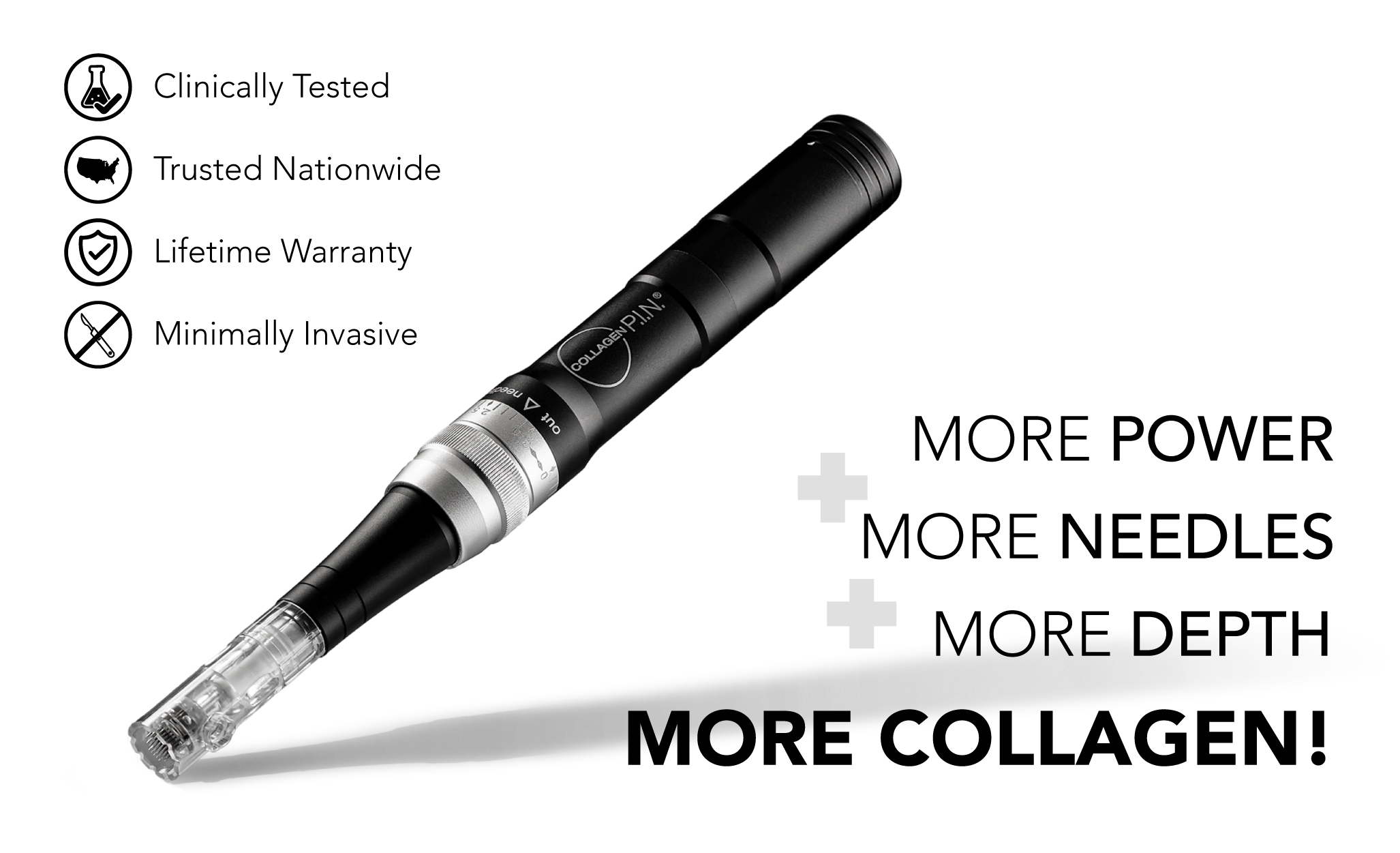
Professional microneedling pens adjust between 0.1mm and 3.0mm, and each depth band serves a different indication. The Collagen P.I.N. dial spans that full 0.1mm to 3.0mm range, while the SkinPen operates between 0.25mm and 2.5mm and the Dermapen 4 between 0.2mm and 3.0mm.
Here is how the bands map to treatment goals:
- 0.1mm to 0.3mm targets product absorption and surface refinement within the epidermis, the band many state boards assign to estheticians.
- 0.5mm to 1.0mm targets fine lines, enlarged pores, and early texture change on the face.
- 1.0mm to 1.5mm targets wrinkles, sun damage, and uneven pigment on the cheeks and forehead.
- 1.5mm to 2.5mm targets rolling and boxcar acne scars, the band covered by most FDA clearances.
- 2.5mm to 3.0mm targets stretch marks and dense body scars, the band where 12-pin body cartridges outperform 36-pin facial arrays.
Thin zones demand shallow settings. The periorbital area, the forehead over bone, and the neck tolerate 0.25mm to 0.5mm, while the cheeks and jawline accept deeper passes. A full depth-by-area reference sits in our microneedling depth chart and guide.
Cartridge Design: What Separates a Safe Tip From a Risky One
Cartridge engineering decides sterility, penetration uniformity, and cross-contamination risk before the motor ever matters. Professional systems use 3 cartridge families, and each family serves a distinct protocol:
- Standard multi-pin cartridges perform collagen induction. The Collagen P.I.N. facial cartridge holds 36 needles at 30 gauge, and the SkinPen cartridge holds 14 needles.
- Body cartridges treat stretch marks and dense scar tissue. The Collagen P.I.N. body cartridge holds 12 needles at 32 gauge for deeper, slower passes.
- Nano cartridges carry silicone or micro-pyramid tips that stay within the stratum corneum for serum absorption and surface polish without puncture.
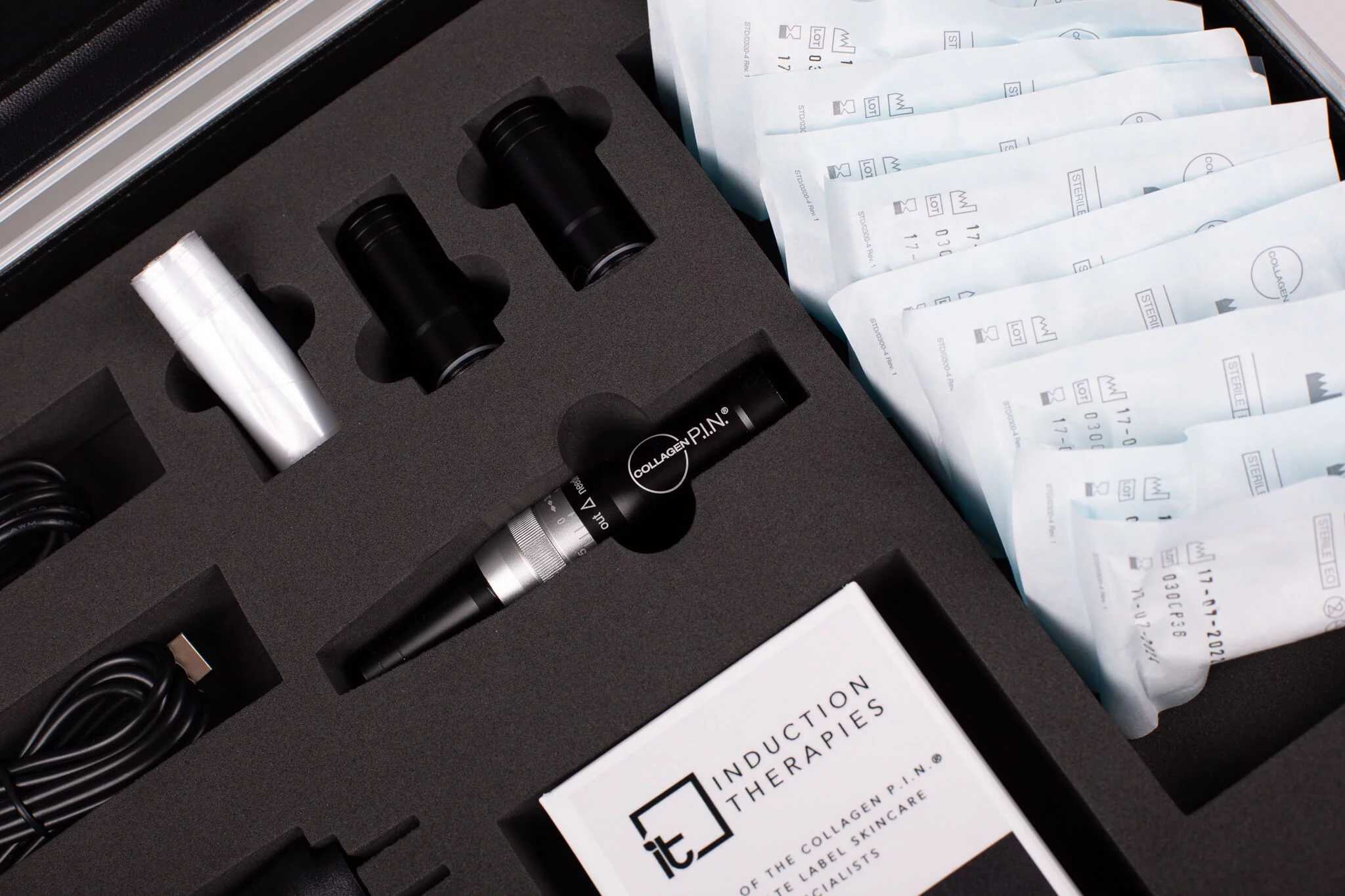
Four engineering features protect the client and the provider. A sealed internal membrane blocks fluid backflow into the handpiece. Gamma-sterilized, individually sealed packaging keeps the needle array sterile until the moment of use. A locked, contained needle housing keeps every pin in vertical alignment so penetration stays even across the pass. Single-use construction removes reprocessing risk entirely.
Uncertified marketplace cartridges skip these features. A cartridge without a backflow seal draws blood and serum into the motor housing, where no disinfectant reaches. A cartridge with loose pin alignment scratches laterally instead of puncturing vertically, which tears the epidermis and prolongs healing. Buy cartridges from the device manufacturer, confirm the sterilization marking on each pouch, and reject any pouch with a broken seal.
Certification Beyond the FDA Label
FDA 510(k) clearance is the strongest single credential for a microneedling pen sold in the United States, and it is not the only marking worth checking. A complete certification review covers 5 items:
- FDA 510(k) clearance. Confirms the device passed review as a Class II medical device for named indications, such as facial acne scars. Search the device name in the FDA 510(k) database before purchase.
- CE marking. Confirms conformity for sale in the European market. CE status matters for multi-market brands and signals an audited design file, though it does not substitute for FDA clearance in a U.S. medical setting.
- ISO 13485 manufacturing. Confirms the factory runs an audited medical-device production system with validated sterilization.
- Serial number and documentation. A genuine professional device ships with a unique serial number, an instruction manual naming the legal manufacturer, and access to training records. Counterfeit pens sold through open marketplaces routinely omit all three.
- Insurer acceptance. Confirm your liability carrier lists the device, or its clearance class, before the first client sits down. Carriers decline claims tied to uncleared equipment more often than tied to technique.
The Collagen P.I.N. holds FDA clearance as a treatment intended to improve the appearance of facial acne scars in adults with Fitzpatrick skin types I to III, aged 22 years and older. SkinPen and the Candela Exceed hold their own 510(k) clearances with distinct indication lists, so match the clearance wording to the treatments on your menu, not just to the brand name.
Our Microneedling Pens for Professional Use Shortlist
Here’s the list of the best professional microneedling devices I’ll cover in this article:
- Collagen P.I.N.
- SkinPen by Crown Aesthetics
- Dermapen 4
- Dr. Pen Ultima M8
- DP4 Microneedling Pen by DP Derm
- SkinStylus SteriLock MicroSystem
- Rejuvapen NXT
- Exceed Medical Microneedling Device
- Morpheus8 by InMode
- Vivace RF Microneedling System
Collagen P.I.N.
Best for: Med spa owners and licensed practitioners seeking a high-performance, FDA-cleared microneedling device with customizable treatment options, reliable support, and a focus on patient comfort and clinical results.
Overview
Collagen P.I.N.® is a professional-grade microneedling pen designed specifically for clinical use in med spas and dermatology practices. The device stands out with its advanced 36-pin needle system—offering more needles than most competitors—which enables efficient, consistent, and less uncomfortable treatments for patients. Collagen P.I.N.® features adjustable treatment depth via a precision dial, battery operation for enhanced control, and an advanced needle assembly for optimal results. The company emphasizes both product quality and customer service, providing dedicated representatives for device support, demos, and re-orders, ensuring practitioners have the resources needed to deliver effective collagen induction therapy.
See CollagenPIN® in Action
Get a Quick Tour of Why CollagenPIN is tailor made for your clinic.
- Precision microneedling with adjustable depth
- Single-use cartridges & streamlined hygiene
- Setup, technique tips, and maintenance
- Training, support, and pricing overview
Pros
- FDA-cleared and designed for professionals: Ensures compliance and safety for clinical use, giving practitioners and clients peace of mind.
- 36-pin advanced needle system: More needles per cartridge allow for efficient coverage, less drag, and minimized discomfort during treatments.
- Customizable treatment depth: Precision dial enables practitioners to tailor needle penetration for different skin areas and concerns, enhancing treatment versatility and results.
- Minimal downtime and high patient tolerability: Patients can resume daily activities quickly, with most reporting little to no post-treatment discomfort or side effects.
- Dedicated customer support: Access to knowledgeable representatives for ongoing support, training, and supply management.
Cons
- Device and consumable costs: As a professional, FDA-cleared device, initial investment and ongoing cartridge purchases may be higher than consumer-grade alternatives (pricing details not publicly listed).
- Requires practitioner training: To maximize safety and results, proper training is necessary, which may require time and resources for new users.
Pricing, Integrations, and Customer Support
- Pricing: Specific pricing is not listed on the website; interested buyers must contact Collagen P.I.N.® directly for quotes and purchasing, which is typical for professional medical devices.
- Integrations: The device is a standalone microneedling system and does not require software integrations. It is compatible with standard clinical protocols and topical serums, such as hyaluronic acid, for enhanced results.
- Customer Support: Collagen P.I.N.® is noted for its exceptional customer service, offering access to personal representatives for device support, demos, and re-orders, ensuring practitioners have ongoing assistance to keep their practice running smoothly.
Overall, Collagen P.I.N.® is a robust choice for med spa professionals prioritizing clinical efficacy, patient comfort, and reliable support in their microneedling offerings.
SkinPen by Crown Aesthetics
Best for: Practitioners seeking an FDA-cleared device with a strong safety profile for treating facial acne scars and neck wrinkles.
Overview
SkinPen, developed by Crown Aesthetics, holds the distinction of being the first FDA-cleared microneedling device available in the United States. Designed for professional use in aesthetic practices, SkinPen emphasizes safety, reliability, and predictable results. The system utilizes precision-engineered, single-use sterile needle cartridges and is backed by clinical data. Crown Aesthetics also provides comprehensive training and support resources for practitioners to ensure proper usage and optimal outcomes.
Pros
- FDA Clearance: As the first device to achieve FDA clearance for microneedling, SkinPen offers practitioners a significant advantage in terms of documented safety, efficacy for specific indications (facial acne scars, neck wrinkles), and compliance, which can be crucial for insurance and marketing purposes.
- Emphasis on Safety: The device features single-use, sealed cartridges with a lock-out mechanism to prevent cross-contamination and ensure sterility. This focus on safety is paramount in professional settings.
- Brand Recognition & Trust: Due to its FDA status and marketing efforts, SkinPen is a well-recognized name among both practitioners and potential patients, which can help build trust and attract clients seeking established treatments.
- Structured Training: Crown Aesthetics provides access to training materials and programs (like SkinPen University) to ensure practitioners are well-versed in the device’s operation and treatment protocols.
Cons
- Higher Consumable Costs: The proprietary, single-use needle cartridges, while essential for safety, represent a significant ongoing operational cost that is often higher than cartridges for non-FDA cleared or competing devices.
- Initial Investment: The cost of acquiring the SkinPen device itself can be higher compared to some other professional microneedling pens on the market, reflecting its FDA status and brand positioning.
- Perceived Limited Versatility by Some: While cleared for specific, common indications, some practitioners may feel other devices offer broader treatment options or more varied needle configurations outside of SkinPen’s standard offerings.
Key Device & Service Features
| Feature | Description |
|---|---|
| FDA Status | Class II medical device, first FDA-cleared microneedling pen. |
| Cleared Indications | Treatment of facial acne scars (ages 22+); Improvement of neck wrinkles. |
| Cartridge Type | Proprietary, single-use, sterile needle cartridges (typically 14 needles). Sealed to prevent cross-contamination. |
| Needle Depth | Adjustable, typically ranging from 0.25mm to 2.5mm, allowing for customized treatments. |
| Motor/Speed | Engineered for consistent performance and precise needle penetration. |
| Training | Comprehensive training resources provided through SkinPen University and support teams. |
| Support | Dedicated customer and clinical support available to practitioners. |
| Cost Structure | Premium pricing for the device; ongoing costs associated with proprietary single-use cartridges. |
Dermapen 4
Best for: Practitioners seeking a high-speed, technologically advanced pen for precise and versatile microneedling treatments across various skin conditions.
Overview
Dermapenworld is a globally recognized company often credited with pioneering automated microneedling technology. The Dermapen 4 is their flagship device, known for its speed, digital interface, and patented technologies designed to enhance treatment efficacy and patient comfort. It incorporates Advanced Oscillating Vertical Needle™ (AOVN™) technology and features a 16-needle cartridge, aiming to deliver efficient and minimally invasive treatments for concerns like aging, scarring, pigmentation, and more.
Pros
- Advanced Technology: The AOVN™ technology and powerful motor allow for rapid, precise vertical needle penetration (up to 1,920 puncture channels per second), designed to minimize epidermal damage, reduce drag, and potentially decrease patient discomfort compared to less advanced pens.
- Versatility & Precision: Offers fully automated and adjustable depth (0.2mm to 3.0mm) and speed settings, allowing practitioners to customize treatments accurately for different skin areas and conditions. Features dedicated scar treatment settings.
- Ergonomics & Design: Generally considered lightweight and ergonomic, reducing practitioner fatigue during treatments. Features a clear digital display for settings.
- Brand Recognition & Support: Dermapen is a well-established brand, which can add credibility to a practice. The company typically offers training resources, marketing support, and protocols.
Cons
- High Initial & Ongoing Cost: The Dermapen 4 device represents a significant upfront investment. Furthermore, it requires proprietary needle cartridges, which are considerably more expensive than generic cartridges used by some other pens, increasing the cost per treatment.
- Proprietary Cartridges: Practices are locked into using only Dermapen-branded cartridges, limiting flexibility and potentially leading to supply chain dependency or higher consumable costs.
- Mixed Customer Service Reports: While some users report positive experiences, others have cited difficulties or slow responses when dealing with customer service or warranty issues.
Key Features & Specifications
| Feature | Description |
|---|---|
| Technology | Advanced Oscillating Vertical Needle™ (AOVN™) |
| Needle Cartridge | 16-needle, gamma-sterilized, single-use proprietary cartridges with anti-backflow |
| Penetration Depth | Electronically adjustable from 0.2mm to 3.0mm |
| Speed | Multiple speed settings; up to 120 revolutions per second |
| Operation | Corded or cordless (battery) operation |
| Display | Digital LED display for speed and depth settings |
| Build | Medical-grade aluminum body |
| Regulatory | Practitioners should verify current FDA status and classification for intended use in their region. |
| Support | Training programs, protocols, marketing materials often provided. |
Dr. Pen Ultima M8
Best for: Cost-conscious practitioners seeking adjustable features for cosmetic microneedling treatments.
Overview
Dr. Pen USA is a well-known supplier of affordable microneedling pens, with the Dr. Pen Ultima M8 being one of their popular cordless models. It’s recognized for its digital speed display, multiple speed settings, and adjustable needle depth, aiming to provide versatility for various skin treatments. While popular and accessible, its suitability for professional med spa environments in the USA often requires careful consideration of regulatory compliance, particularly regarding FDA status.
Pros
- Affordability: The M8 presents a significantly lower investment compared to premium, FDA-cleared medical microneedling devices, making it an attractive option for budget-conscious practices or as a secondary device.
- Adjustable Settings: Features 6 distinct speed levels and a broad needle depth adjustment range (typically 0.25mm to 2.5mm), providing practitioners flexibility to tailor treatments to specific client needs and treatment areas.
- Cordless Convenience: Offers both corded and cordless operation thanks to its rechargeable battery, allowing for greater freedom of movement during procedures without being tethered to a power outlet.
- Digital Speed Display: Incorporates a clear digital screen that displays the selected speed level, allowing for easy monitoring and adjustment during treatment.
Cons
- FDA Status & Compliance: The Dr. Pen M8 is generally not FDA-cleared as a Class II medical device for microneedling. This lack of clearance can create significant regulatory, insurance, and liability challenges for licensed medical spas and practitioners operating under medical oversight in the United States. Use may be restricted based on state regulations and license type.
- Build Quality Concerns: Compared to high-end professional devices built for heavy daily use, the M8’s construction may feel less robust, and long-term durability under rigorous spa conditions can be a concern for some users.
- Motor Consistency: While adequate for many applications, the motor might lack the power and consistent speed under load found in more expensive medical-grade pens, potentially impacting performance on denser tissue or extensive scarring.
- Cartridge Quality Control: Some practitioners report occasional inconsistencies in the quality, sharpness, or sterility assurance of the proprietary replacement needle cartridges compared to those from medically certified brands.
Key Specifications
| Feature | Specification |
|---|---|
| Operation | Corded & Cordless (Rechargeable) |
| Speed Levels | 6 Settings |
| Needle Depth | Adjustable (0.25mm – 2.5mm) |
| Display | Digital Speed Display |
| Body Material | Typically Aluminum Alloy |
| Needle Cartridges | Proprietary M8 cartridges (e.g., 11-pin, 16-pin, 36-pin, Nano) |
Professional Use Considerations
The primary consideration for med spas evaluating the Dr. Pen M8 is its regulatory status. Operating without FDA-cleared devices can conflict with state medical board regulations, malpractice insurance requirements, and potentially expose the practice to liability risks. While it might be permissible for purely cosmetic treatments within the epidermis under certain esthetician licenses in some states (practitioners must verify their local laws), its use for medical microneedling (inducing controlled injury beyond the epidermis for collagen induction therapy) generally requires an FDA-cleared device in a clinical setting. Due diligence regarding state and local regulations is crucial before incorporating the M8 into a professional service menu.
DP4 Microneedling Pen by DP Derm
Best for: Aesthetic professionals prioritizing advanced technology and precision for diverse microneedling applications with enhanced safety protocols.
Overview
DP Derm is the company behind the original Dermapen, a well-regarded name in the microneedling industry. Their DP4 device represents their fourth-generation pen, integrating patented technologies aimed at improving treatment efficacy, patient comfort, and practitioner safety. It’s designed for controlled micro-injury to stimulate collagen and elastin production, addressing various skin concerns like aging, scarring, pigmentation, and more across different body areas.
Pros
- Advanced Technology: Features AOVN™ (Advanced Oscillating Vertical Needle) technology, designed for precise vertical needle entry and exit, minimizing epidermal damage and drag, potentially leading to less pain and downtime.
- High Speed & Efficiency: Operates at high speeds (reportedly up to 1920 microchannels per second), allowing for faster treatment times
SkinStylus SteriLock MicroSystem
Best for: Practices that want the broadest set of FDA-cleared microneedling indications, including periorbital treatment across all Fitzpatrick skin types.
Overview
The SkinStylus SteriLock MicroSystem is a Class II mechanical (non-RF) microneedling device from SkinHealth Systems, the company behind Hydrafacial. In July 2026, the FDA cleared SkinStylus for the improvement of periorbital wrinkles in adults aged 22 and older across Fitzpatrick skin types I–VI.
That clearance sits alongside two existing indications — facial acne scars in Fitzpatrick types I–III, and surgical or traumatic hypertrophic scars on the abdomen — making SkinStylus the only microneedling device currently cleared for all three.
SkinStylus is built around its cleared-indication story and its pairing with Hydrafacial protocols. Clinics running high-volume collagen induction as a standalone service — rather than as an add-on inside a larger facial protocol — often weigh it against CollagenPIN, where the 36-pin cartridge and motor output are engineered around throughput and consistency on dense tissue
Pros
- Three FDA-cleared indications: Periorbital wrinkles (Fitzpatrick I–VI), facial acne scars (I–III), and abdominal hypertrophic scars — the widest cleared range in the category
- All-skin-type periorbital clearance: Clinical data supports massive improvement across Fitzpatrick I–VI (most stop at III)
- Sealed single-use cartridge system: Designed around contamination control for clinical environments.
Cons
- Single cartridge supplier: Single supplier for cartridges, no third party options.
- Protocol-linked Position: Heavily marketed with hydrafacial protocols, making it less relevant to some clinics.
Rejuvapen NXT
Best for: Practices seeking a mid-priced professional microneedling pen.
Overview
Rejuvapen NXT is marketed as a professional microneedling device for cosmetic use. It offers adjustable depth and multiple speeds for common collagen induction treatments.
Let’s break it down. The device lacks FDA Class II clearance, which limits use in some regulated medical settings. Clinics focused on long-term device performance and compliance often shift toward CollagenPIN due to its motor strength and cartridge engineering.
Pros
- Adjustable depth control: Covers face and body treatment needs.
- Lightweight handpiece: Reduces hand fatigue during longer sessions.
- Professional positioning: Designed for licensed providers.
Cons
- Cartridge limitations: Fewer safety features than high-grade systems.
- No FDA clearance: Increases liability considerations in U.S. med spas.
- Moderate motor output: Less consistent penetration on fibrotic tissue.
Exceed Microneedling Device by Candela
Best for: Practices that want FDA clearance for acne scars and wrinkles.
Overview
The Candela Exceed system holds FDA clearance for both facial acne scars and wrinkles, placing it among a small group of compliant microneedling devices in the U.S. This clearance appeals to dermatology practices focused on documented indications.
Next steps matter. While Exceed delivers strong clinical backing, the cost of consumables is one of the highest in the category. Clinics performing frequent treatments often compare it to CollagenPIN, which offers similar mechanical outcomes with lower ongoing expense.
Pros
- Dual FDA indications: Cleared for wrinkles and acne scars.
- Consistent needle penetration: Stable performance across skin types.
- Backed by clinical studies: Supported by manufacturer-submitted data.
Cons
- Very high cartridge pricing: Limits profitability at scale.
- Fewer performance modes: Less versatility than newer mechanical pens.
- High upfront investment: Barrier for growing practices.
Morpheus8 by InMode
Best for: Clinics offering RF microneedling and skin tightening.
Overview
Morpheus8 combines microneedling with bipolar radiofrequency energy and is FDA cleared for coagulation of soft tissue. It targets subdermal remodeling rather than traditional collagen induction therapy.
Here is the tradeoff. RF platforms involve higher device cost, higher consumable cost, and longer recovery times. Clinics focused on mechanical microneedling without RF commonly choose CollagenPIN for faster treatments and broader patient fit.
Pros
- RF delivery: Enables thermal remodeling at deeper levels.
- Multiple handpieces: Covers face and body protocols.
- Strong brand visibility: Common in high-end aesthetic clinics.
Cons
- Overpowered for standard microneedling: Unnecessary for basic CIT workflows.
- Very high capital cost: Not suitable for entry-level providers.
- Increased patient discomfort: RF adds heat-related sensitivity.
Vivace RF Microneedling System
Best for: Practices wanting RF microneedling with reduced discomfort.
Overview
Vivace combines microneedling, RF energy, and LED therapy. It is FDA cleared for RF-based skin procedures and markets itself as a lower-discomfort option within the RF category. Let’s be clear. RF systems raise treatment cost and require more oversight. Many clinics that focus on collagen induction alone transition to CollagenPIN due to speed, simplicity, and cost control.
Pros
- RF microneedling platform: Supports tightening protocols.
- Controlled needle delivery: Designed to reduce drag.
- Optional LED: Cosmetic add-on.
Cons
- High tip cost: RF cartridges increase per-session expense.
- Not suited for routine CIT: Excess capability for basic treatments.
- More training required: RF adds complexity.
All 10 Devices at a Glance
| Device | Technology | FDA Status | Depth Range | Cartridge System |
|---|---|---|---|---|
| Collagen P.I.N. | Mechanical | Cleared for facial acne scars, Fitzpatrick I to III, ages 22+ | 0.1mm to 3.0mm | 36-pin face, 12-pin body, single-use |
| SkinPen (Crown Aesthetics) | Mechanical | Cleared for facial acne scars (22+) and neck wrinkles | 0.25mm to 2.5mm | Proprietary 14-needle, single-use |
| Dermapen 4 | Mechanical (AOVN) | Verify per region | 0.2mm to 3.0mm | Proprietary 16-needle, single-use |
| Dr. Pen Ultima M8 | Mechanical | Not FDA-cleared | 0.25mm to 2.5mm | M8 cartridges, 11 to 36 pin plus nano |
| DP4 (DP Derm) | Mechanical (AOVN) | Verify per region | Not published | Proprietary, single-use |
| SkinStylus SteriLock MicroSystem (SkinHealth Systems) | Mechanical | Cleared for periorbital wrinkles (Fitzpatrick I to VI), facial acne scars (I to III), abdominal hypertrophic scars, ages 22+ | 0.0mm to 2.5mm | 3 cleared configurations (11-needle, 36-needle, 36-needle mixed depth), gamma-sterilized, single-use |
| Rejuvapen NXT | Mechanical | Not FDA-cleared | Adjustable, not published | Proprietary |
| Exceed (Candela) | Mechanical | Cleared for wrinkles and acne scars | Not published | Proprietary, single-use |
| Morpheus8 (InMode) | RF microneedling | Cleared for soft tissue coagulation | Subdermal RF tips | RF consumable tips |
| Vivace | RF microneedling + LED | Cleared for RF procedures | RF tips | RF consumable tips |
The Verdict: Matching the Pen to the Practice
The best microneedling pen for professional use is the FDA-cleared mechanical device whose depth range, cartridge cost, and support program fit your license class and treatment menu. The roundup resolves into 4 matches:
- Med spas and dermatology practices running high treatment volume get the strongest fit from Collagen P.I.N., which pairs FDA clearance with a 36-pin cartridge, a 0.1mm to 3.0mm dial, and dedicated per-account support.
- Practices that market clearance credentials first fit SkinPen or the Candela Exceed, both cleared for named indications, at the price of higher locked cartridge costs.
- Clinics selling skin tightening alongside collagen induction fit an RF platform, Morpheus8 or Vivace, and should budget for the higher capital, tip, and training costs RF adds.
- Budget-limited studios doing cosmetic epidermal work can weigh the Dr. Pen M8 or Rejuvapen NXT, with the caveat that neither holds FDA clearance and state rules restrict where they belong.
Confirm your state scope, price out cartridges across 12 months of projected bookings, and book demos with your top 2 choices before you commit. A 15-minute hands-on demo reveals motor behavior, grip fatigue, and cartridge workflow faster than any spec sheet
Frequently Asked Questions
What makes a microneedling pen professional-grade?
A professional-grade microneedling pen holds regulatory clearance or registration, uses sterile single-use cartridges, offers adjustable depth and speed, and maintains a stable insertion rate under load. Consumer pens and derma rollers fail at least one of these tests. The manufacturer of a professional device supplies training materials, a serial-numbered unit, and documentation that supports insurance and state board review.
What depth do professional microneedling pens reach?
Professional microneedling pens adjust between 0.1mm and 3.0mm depending on the model. The Collagen P.I.N. dial covers 0.1mm to 3.0mm, the SkinPen covers 0.25mm to 2.5mm, and the Dermapen 4 covers 0.2mm to 3.0mm. Shallow settings under 0.5mm refine surface texture, mid-range settings between 1.0mm and 1.5mm treat wrinkles and pigment, and settings from 1.5mm to 3.0mm treat acne scars and body scarring.
Do estheticians need an FDA-cleared microneedling pen?
Estheticians need whichever device class their state board permits, and an FDA-cleared pen is the safer purchase in every jurisdiction. Some states cap estheticians at epidermal depths near 0.3mm, some require medical supervision for any collagen induction, and some bar the treatment outside medical settings. Check your state board rules and your liability policy before purchase, since carriers decline claims tied to uncleared devices.
How much does a professional microneedling pen cost?
Professional microneedling pens range from a few hundred dollars for uncleared imports to five-figure sums for RF platforms, with FDA-cleared mechanical pens priced between those poles by quote. Cartridge cost per session shapes the real cost more than the sticker price, since consumables recur with every booking. Request quotes with the cartridge price sheet attached, then divide the device price by your per-session margin to find your payback point.
How do you clean a professional microneedling pen between clients?
Discard the used cartridge into a sharps container, remove the barrier sleeve, and wipe the handpiece with an EPA-registered hospital-grade disinfectant for the full labeled contact time. Load a fresh sealed cartridge and a new barrier sleeve in front of the client, then log the treatment and cartridge lot in the record. OSHA’s Bloodborne Pathogens Standard (29 CFR 1910.1030) governs the routine because the treatment contacts blood.
How long do microneedling results last?
Microneedling results build for up to 12 months after a session, since fibroblasts continue producing new collagen and elastin long after the skin surface heals. Visible change typically appears within 3 to 10 days as the surface recovers, and texture, tone, and scar depth keep improving across the following months. Most providers schedule a series of 3 to 6 sessions spaced 4 to 6 weeks apart to compound the response.


 Enter your information to receive a 2022 Catalog