
Microneedling has become one of the most requested treatments in aesthetic medicine. Clients seek it for acne scars, wrinkles, pigmentation, and overall skin rejuvenation. For med spas and aestheticians, the device used matters as much as the treatment itself.
Three devices are at the center of discussion: SkinPen, DermaPen, and CollagenPIN. Each takes a different approach. Here is a side-by-side look at their design, performance, and practical fit for businesses.
See CollagenPIN® in Action
You’ve compared CollagenPIN vs SkinPen—now get a quick tour tailored to your clinic.
- Precision microneedling with adjustable depth
- Single-use cartridges & streamlined hygiene
- Setup, technique tips, and maintenance
- Training, support, and pricing overview
Device Overviews
SkinPen: The FDA-Approved Pioneer
- First FDA-cleared microneedling device for facial acne scars
- 14 titanium needles per cartridge.
- Adjustable depth: 0.25–2.5 mm.
- Strong backing from published studies.
SkinPen appeals to clinics that want regulatory assurance and data-driven confidence.
DermaPen: Versatile and Fast
- Produced by DermapenWorld
- 12–16 needle cartridges depending on the model.
- Adjustable depth: 0.25–3.0 mm.
- High-speed motor: up to 1,920 punctures per second.
DermaPen fits practices that need range and speed. Its versatility allows treatment of wrinkles, scars, pigmentation, and stretch marks.
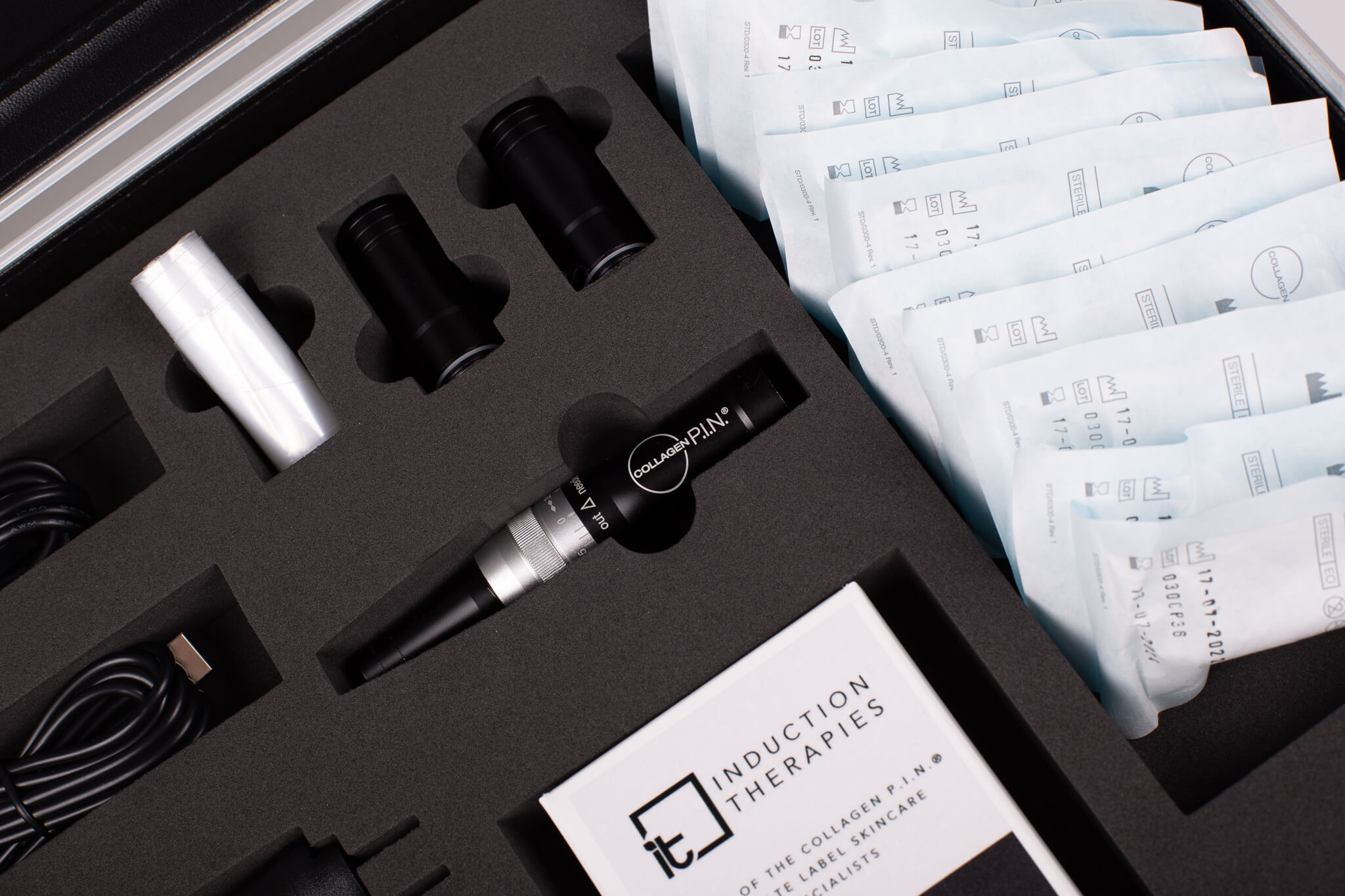
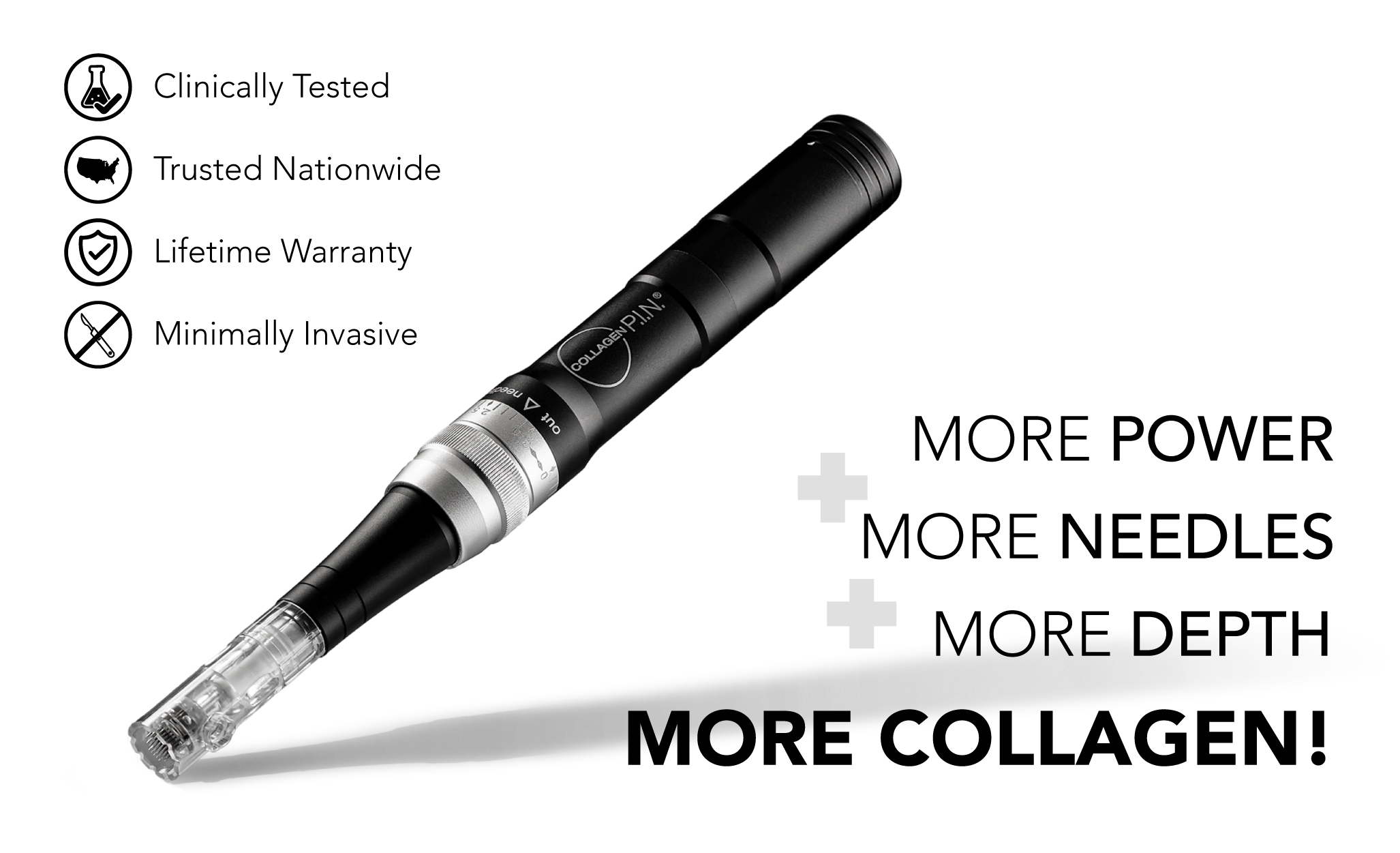
CollagenPIN: Practical for Med Spas
- Manufactured by Induction Therapies
- FDA-Cleared Microneedling Pen (Grade 2)
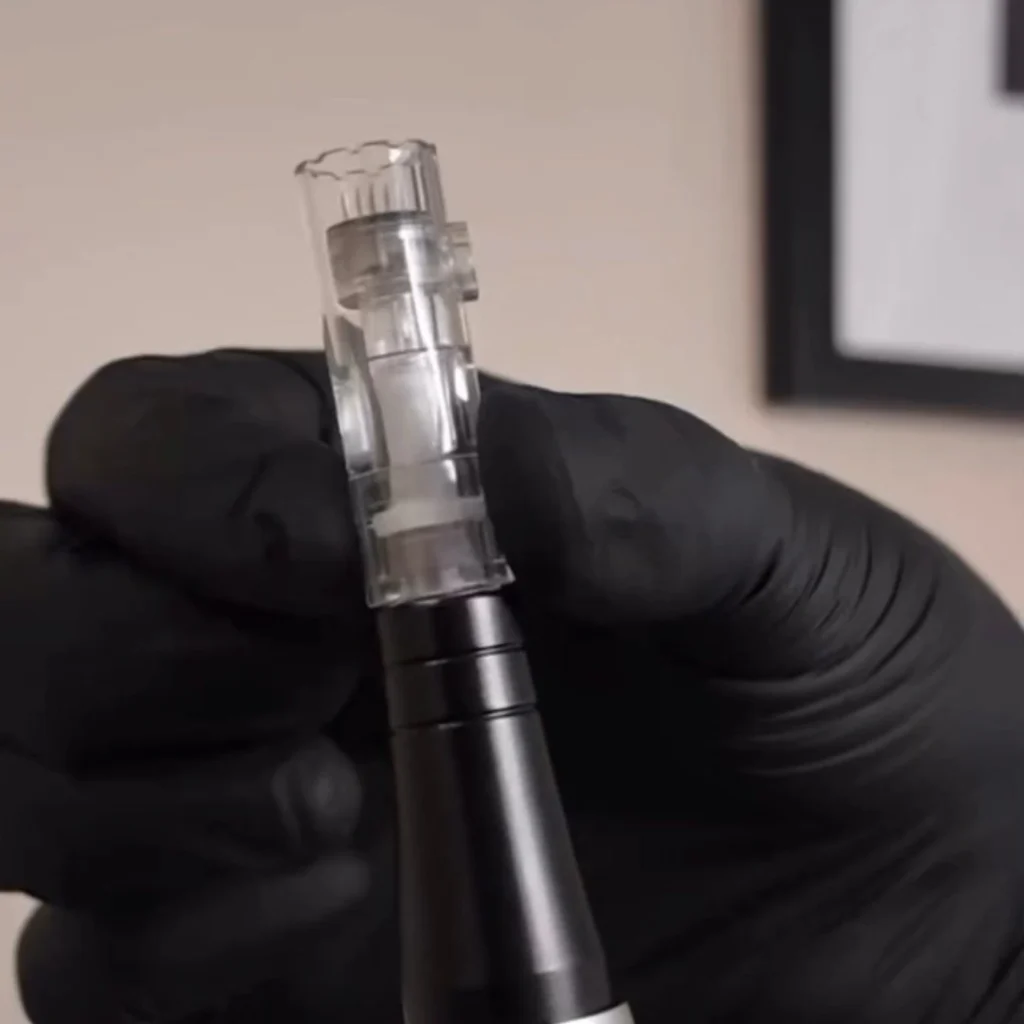
- 36-needle stainless steel cartridges.
- Adjustable depth: 0.25–2.0 mm.
- Lightweight, pen-style design.
Here is why this matters: with more needles per pass, CollagenPIN offers broader coverage in less time. Many practitioners report lower client discomfort and faster treatment flow. While it does not yet carry FDA clearance, it is gaining ground in aesthetic businesses because of its lower upfront cost and ease of training staff.
Comparing Technology and Performance
Needle Systems
- SkinPen: 14 needles, precise but slower coverage.
- DermaPen: 12–16 needles, balance of depth and speed.
- CollagenPIN: 36 needles, more coverage per pass, well-suited for high-volume spa treatments.
Motor and Speed
- SkinPen: steady and controlled.
- DermaPen: fastest in class at 1,920 punctures per second.
- CollagenPIN: moderate speed, designed for comfort and consistency.
Safety
All three use single-use cartridges to reduce risk of contamination. SkinPen stands out for its FDA-cleared cartridge system, while DermaPen and CollagenPIN rely on strict sterilization standards from manufacturers.
Clinical Outcomes
- SkinPen: Backed by peer-reviewed studies showing scar and texture improvement
- DermaPen: Supported by studies on acne scars, pigmentation, and wrinkles
- CollagenPIN: Limited published trials, but strong practitioner reports highlight improved skin tone and collagen response.
Next steps for CollagenPIN will depend on more peer-reviewed studies to match the research volume of its competitors.
Patient Comfort and Recovery
- SkinPen: mild discomfort, often paired with topical numbing.
- DermaPen: speed reduces sensation, but depth can increase intensity.
- CollagenPIN: often described as gentler, with broader coverage reducing treatment time.
Recovery across devices is similar: mild redness and swelling for one to three days.
Cost and Accessibility
- SkinPen: higher device and cartridge cost; appeals to clinics marketing FDA-cleared treatments.
- DermaPen: mid-range cost; multiple models offer budget flexibility.
- CollagenPIN: lower buy-in and cartridge costs; easier for growing med spas to add without financial strain.
See CollagenPIN® in Action
You’ve compared CollagenPIN vs SkinPen—now get a quick tour tailored to your clinic.
- Precision microneedling with adjustable depth
- Single-use cartridges & streamlined hygiene
- Setup, technique tips, and maintenance
- Training, support, and pricing overview
Comparison Table
| Feature / Factor | SkinPen | DermaPen | CollagenPIN |
|---|---|---|---|
| Regulatory Status | FDA-cleared for acne scars | CE-marked; used worldwide | Not FDA-cleared; widely used in aesthetic settings |
| Needle Count | 14 titanium needles | 12–16 needles | 36 stainless steel needles |
| Depth Range | 0.25–2.5 mm | 0.25–3.0 mm | 0.25–2.0 mm |
| Motor Speed | Controlled, moderate | Up to 1,920 punctures/sec | Moderate, focus on comfort |
| Clinical Data | Strong peer-reviewed studies | Studies across scars, wrinkles, pigmentation | Limited published data; strong practitioner feedback |
| Patient Comfort | Mild with numbing | Reduced sensation due to speed | Gentler feel, broader coverage |
| Downtime | 2–3 days redness/swelling | 2–3 days redness/swelling | 1–2 days redness/swelling |
| Ease of Training | User-friendly | More training for customization | Very simple, good for multiple staff |
| Cost | Higher device and cartridges | Mid-to-high depending on model | Lower buy-in and cartridge cost |
| Best Fit For | Clinics prioritizing FDA clearance | Practices needing range and speed | Med spas seeking affordability, ease, and comfort |
Final Takeaway
Each device offers strengths:
- SkinPen provides regulatory backing and published evidence.
- DermaPen offers the widest treatment range and fastest motor.
- CollagenPIN delivers practical value for med spas, combining a 36-needle system, lower client discomfort, and more affordable costs.
Here is the bottom line: for businesses focused on accessibility, client comfort, and financial sustainability, CollagenPIN stands out as the most adaptable choice, even as it continues to build more clinical research.
 Enter your information to receive a 2022 Catalog